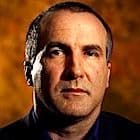
Interviews with Horacio Julio Piña Borrego
Cuba
Why I Became A Dissident
“Actually, my father was forced to fire me.”
Transcript
My name is Horacio Julio Piña.
I was born in a village called Las Martinas, a town in the far west, in the province of Pinar del Rio, in the Sandino municipality.
In [19]61 my father joined the militia, when the [Cuban] revolution triumphed. My family wanted to leave but was unable. My father believed in the process and stayed in Cuba. My maternal grandfather was a political prisoner. There were two inclinations [pro and anti-revolution] within the family but there was no conflict. [In 1959, Fidel Castro (1926 – ) led the Cuban Revolution that overthrew the military government of Fulgencio Batista, seized power, and established a communist dictatorship.]
I was born there. My father took a leadership position in [19]62. While I was growing up, everything within the family was fine.
I attended secondary and pre-university schools. There I met Pablo [Pérez Izquierdo] and Cundo [Secundino Péres Izquierdo] and we became great friends. They have nothing to do with my village but that’s where we met. [Pablo Pérez Izquierdo and Secundino Péres Izquierdo are Cuban human rights activists.]
In [19]90, [19]91 or [19]92 the Human Rights Party of Cuba, Affiliated with the Sakharov Foundation was formed. Pablo and Cundo joined while I stayed on the sidelines. I collaborated for a while. In [19]93 they went to prison- Pablo on charges of enemy propaganda. I continued collaborating until [19]96 when I joined the movement and became an activist. [The Cuban Pro-Human Rights Party, Affiliated with the Sakharov Foundation is a civil society organization working to monitor human rights violations in Cuba. Andrei Sakharov (1921-1989) was a Russian physicist who was instrumental in the development of the Soviet Union’s nuclear arsenal. However, he became one of the regime´s foremost critics and an iconic defender of human rights and democracy around the world. He received the Nobel Peace prize in 1975.]
I worked at the company where my father was deputy director, in the economic department. I worked there until they fired me. Actually, my father was forced to fire me.
Because I was an activist in the movement, I was fired like many others who were within the ranks of the opposition, who are unable to find work [because of their political beliefs].
During my school days, I considered myself apolitical. Politics did not interest me. Like many Cubans, I wanted to live and escape. I would go with Pablo [Pérez Izquierdo], who had been a political prisoner, to their activities. I was not an activist but I participated in [opposition] activities. I began to witness [human rights] violations and so I got more involved.
To tell the truth, at the beginning, I joined [the Cuban Pro-Human Rights Party, Affiliated with the Sakharov Foundation] because I wanted leave the country, to do something, to be arrested and leave. Then I had the opportunity to leave but I stayed because I thought it was the best thing I could do for our country.
As the name says – the Party of Human Rights. Mostly it monitored Human Rights violations. There was no political party agenda. It only monitored violations and made them known to the people. That was what our party did specifically.
In Cuba there are many movements. All have the same goal: change and democracy in Cuba, although there are different perspectives.
Not that there´s division. Some are farther right, others are more to the center [of the political spectrum]. But everyone is focused on the same thing: change.
I do not think there is division, although the strategies may be different. In fact, there have been many councils and ways to project one goal.
About Horacio Julio Piña Borrego
Horacio Julio Piña Borrego, the son of an ardent communist, was born in Las Martinas, Cuba in 1966. Horacio first became active in the democratic opposition as a member of the Cuban Pro-Human Rights Party Affiliated with the Sakharov Foundation; in 1999, he became a provincial delegate for the organization in his hometown of Pinar del Rio. Through his activism, he also collected signatures for the Varela Project, an initiative that petitioned the regime to hold open elections and expand civil liberties.
In March 2003, Horacio was detained along with 74 other nonviolent dissidents in a massive government crackdown known as the Black Spring. He received a summary trial in which he was sentenced to 20 years in prison. Horacio was placed in solitary confinement until August 2004, and was subjected to physical and psychological torture throughout his time in prison. In October 2010, the Catholic Church and the Spanish government negotiated the release of the 75 and Horacio went into exile with his family. He lived in Spain as a political refugee until 2011, before settling in the United States.
Horacio is active in the fight for Cuban freedom and democracy; he serves as the Managing Director of the Cuban Institute for Freedom of Expression and Press in Florida.