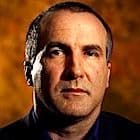
Interviews with Horacio Julio Piña Borrego
Cuba
Economic and Technological Barriers
“Anyone who is linked to the opposition doesn’t have a job and risks going to prison.”
Transcript
Because it is a [communist] system that controls the country´s economy, all work done in Cuba must be approved. It is the government that gives or takes away your job. It gives you your salary and controls the unions. It is a great challenge for the opposition, which must depend on its own resources.
My example: they fired me from my job. Since then I became dependent on my parents. Our movement was not receiving anything from the outside. In 2001 or 2002 we started getting help to create independent pharmacies. We at least got medicines.
The opposition in Cuba depends on family support because they cannot work. Anyone who is actively linked to the opposition doesn’t have a job and risks going to prison and relying more on family. I think that´s one of the great challenges they face every day: the economy.
Technology did not exist in my time. Right now my province, Pinar del Rio, is nicknamed “Cinderella” because it is the most backward. But now you can find a cell phone in any small town. When something happens, they can record it and they can send it. No such thing existed while I was there. There was so much repression. We could talk about what happened but could not offer photographic evidence. I think the challenges are technology, finances and information.
A cell phone is expensive. Less advanced models cost 50 or 60 CUC [Cuban convertible pesos]. The big problem in Cuba is how to maintain a cell phone account, when they charge you the same whether you make or receive a call. I think it has changed a bit now. You’re charged the same for a text [for sending and receiving]. It costs 2 CUC which is 50 Cuban pesos. That is a luxury not many Cubans can afford. [The Cuban convertible peso (CUC) is one of Cuba’s two official currencies; the other, which is more widely used by average citizens, is the Cuban peso (CUP). The CUC is pegged to the U.S. dollar and worth 25 times as much as the CUP.]
Most Cubans have a cell phone to stand out. Prices have come down a bit but not much. Normando [Hernandez] did studies on the number of phones per inhabitant and it was not a large number of Cubans who have a phone or access to the Internet. [Normando Hernandez (1969 – ) is a Cuban independent journalist and human rights advocate. From 2003 to 2010, he was a prisoner of conscience after his arrest in the Black Spring crackdown. He has lived in the United States since 2011.]
Recently, centers were created [by the government] where you can surf the Internet. It costs 4.50 CUC an hour to surf, not the Internet but the “Intranet,” which is what exists in Cuba.
450 CUC is more than 100 Cuban Pesos. The average Cuban salary is about 220 to 250 Cuban Pesos. Imagine who can afford that without receiving money transfers from here [the United States] or from someone there on an international mission [referring to Cuban professionals, such as doctors, nurses, and engineers, who are sent overseas by the government to bolster allies]. Many doctors can afford it. But I don’t think ordinary Cubans — the farmer who lives off the land or those on a living wage — can access that technology.
About Horacio Julio Piña Borrego
Horacio Julio Piña Borrego, the son of an ardent communist, was born in Las Martinas, Cuba in 1966. Horacio first became active in the democratic opposition as a member of the Cuban Pro-Human Rights Party Affiliated with the Sakharov Foundation; in 1999, he became a provincial delegate for the organization in his hometown of Pinar del Rio. Through his activism, he also collected signatures for the Varela Project, an initiative that petitioned the regime to hold open elections and expand civil liberties.
In March 2003, Horacio was detained along with 74 other nonviolent dissidents in a massive government crackdown known as the Black Spring. He received a summary trial in which he was sentenced to 20 years in prison. Horacio was placed in solitary confinement until August 2004, and was subjected to physical and psychological torture throughout his time in prison. In October 2010, the Catholic Church and the Spanish government negotiated the release of the 75 and Horacio went into exile with his family. He lived in Spain as a political refugee until 2011, before settling in the United States.
Horacio is active in the fight for Cuban freedom and democracy; he serves as the Managing Director of the Cuban Institute for Freedom of Expression and Press in Florida.