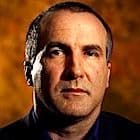
Interviews with Horacio Julio Piña Borrego
Cuba
The Black Spring
“We were placed in separate cells where the mosquitoes and rats crawled on top of us at night.”
Transcript
I got home late that night [on March 18, 2003]. We were able to get almost everything [evidence of pro-democracy activism] out. I went to bed at my usual bedtime of 10 or 11 p.m. At 5 a.m. I got up, turned on Radio Marti, did some things, and took my wife to work. They [security agents] were waiting for me and did not let me leave my home. My house is not in the country. It is between the countryside and a small town. They were waiting in the dark. I was arrested at about 6 a.m.
Near my house there was a baseball field where they took me and handcuffed me. Two or three officers kept me there because they had to wait for others to arrive and conduct the search. The house was surrounded so no one could enter or leave. I had to wait from 6 a.m. until 11 a.m. I wanted them to take me whereever they had in mind because I was handcuffed and seated in an uncomfortable position for several hours. Finally they made some calls and received permission [to proceed].
I was taken to Sandino, the seat of the municipality, to the Department of Safety, to a rather small cell. A hole in the floor served as the toilet. I was there until 3 or 4 p.m. when they returned from their searches. Fidel [Suárez Cruz] arrived too. We rode in a patrol car and were taken to the Pinar del Rio Unit. [Fidel Suárez Cruz (1970- ) is a Cuban freedom activist. He was one of 75 nonviolent dissidents to be imprisoned for his activism during the March 2003 crackdown known as the Black Spring.]
From there they took us to a walled area, a fairly depressing place. We were placed in separate cells where mosquitoes and rats crawled on top of us at night. That was on the 19th[of March]. On the 21st they began the interrogations. When you are inside you do not know whether it is day or night. We could not tell time in these places. The interrogations were constant. Trying to get us to confess that we received money from the United States, that we were doing this to disrupt, to create change, to bring about the “savage capitalism” they say existed before [19]59 in Cuba. [Prior to the 1959 Cuban Revolution that instituted a communist system, Cuba was ruled by a corrupt, anti-communist dictatorship that left many citizens disillusioned with the regime’s professed commitment toward capitalism.] [CW1]Hyperlink to Fidel Suarez Cruz interview.
About Horacio Julio Piña Borrego
Horacio Julio Piña Borrego, the son of an ardent communist, was born in Las Martinas, Cuba in 1966. Horacio first became active in the democratic opposition as a member of the Cuban Pro-Human Rights Party Affiliated with the Sakharov Foundation; in 1999, he became a provincial delegate for the organization in his hometown of Pinar del Rio. Through his activism, he also collected signatures for the Varela Project, an initiative that petitioned the regime to hold open elections and expand civil liberties.
In March 2003, Horacio was detained along with 74 other nonviolent dissidents in a massive government crackdown known as the Black Spring. He received a summary trial in which he was sentenced to 20 years in prison. Horacio was placed in solitary confinement until August 2004, and was subjected to physical and psychological torture throughout his time in prison. In October 2010, the Catholic Church and the Spanish government negotiated the release of the 75 and Horacio went into exile with his family. He lived in Spain as a political refugee until 2011, before settling in the United States.
Horacio is active in the fight for Cuban freedom and democracy; he serves as the Managing Director of the Cuban Institute for Freedom of Expression and Press in Florida.