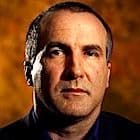
Interviews with Horacio Julio Piña Borrego
Cuba
Regime Targets Family Friends
“Repression is for the whole family.”
Transcript
The family pays. For example, when my then wife graduated with a Bachelors [degree] in Accounting and Finance, I had already joined the opposition in [19]99. In August 2000 she graduated and my town’s bank had a job opening. Her family knew of the opening, but because of our relationship she was not offered that position. She was forced to take a position about 25 kilometers away from where she lived. She was repressed because she could have worked in the same town, without having to travel to places where no [accessible forms of] transportation existed.
My daughter also suffered when I went to prison. I was sent to prison in another province 20 kilometers from my village … The family suffered.
Repression is for the whole family. Whether you´re for or against the system you feel it because they [the regime] constantly call you out on the street as a way to coerce you into discouraging opposition members.
I do not have my own anecdotes but I have those of Dr. Jose Manuel Cruz Santovenia who was with us in the [opposition] movement. Before joining he had a great friend who had a medical degree and became a doctor. That friend took a position in the Ministry of Health, in the Sandino municipality. One night the friend appeared at the home of Dr. Santovenia in the dark so that he would not be seen. The friend said, “Doctor, we cannot continue our friendship. There is no problem between us, but our friendship could hurt me.” Repression even affected friendships. [Dr. Jose Manuel Cruz Santovenia is a Cuban human rights activist who now lives in Miami, Florida.]
About Horacio Julio Piña Borrego
Horacio Julio Piña Borrego, the son of an ardent communist, was born in Las Martinas, Cuba in 1966. Horacio first became active in the democratic opposition as a member of the Cuban Pro-Human Rights Party Affiliated with the Sakharov Foundation; in 1999, he became a provincial delegate for the organization in his hometown of Pinar del Rio. Through his activism, he also collected signatures for the Varela Project, an initiative that petitioned the regime to hold open elections and expand civil liberties.
In March 2003, Horacio was detained along with 74 other nonviolent dissidents in a massive government crackdown known as the Black Spring. He received a summary trial in which he was sentenced to 20 years in prison. Horacio was placed in solitary confinement until August 2004, and was subjected to physical and psychological torture throughout his time in prison. In October 2010, the Catholic Church and the Spanish government negotiated the release of the 75 and Horacio went into exile with his family. He lived in Spain as a political refugee until 2011, before settling in the United States.
Horacio is active in the fight for Cuban freedom and democracy; he serves as the Managing Director of the Cuban Institute for Freedom of Expression and Press in Florida.