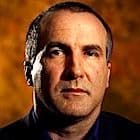
Interviews with Horacio Julio Piña Borrego
Cuba
Trial and Detention
“The defense wasn’t allowed to have witnesses.”
Transcript
My father believed in the [judicial] process. They [parents] went to a lawyer. When they presented the case to the first lawyer, the first lawyer made excuses and said it was a very difficult case. My family had between 8:30 and 11:30 a.m. that morning to find a lawyer. That was the time the prosecution allowed. At 10:45 a.m. my father decided to speak with the head of the firm because he had spoken with so many lawyers and no one wanted to take the case. The head of the firm sided with the lawyers my parents had already seen. My parents unleashed a political tirade saying that we were Cubans who had to be represented. That’s what the law said, no matter the situation.
The trial took place in an amphitheater with a capacity for 800 people. They allowed five people from each family in that amphitheater which is called Primero de Mayo. There were 20 people who came to support us and there were 800 pro-government representatives. They tried to bring people from the CDRs [Committees for the Defense of the Revolution] as the trial was meant to serve as an example. They were government supporters. There was no opposition. One of the five people who came to support me appeared in one of the videos. [Videos of Horacio’s opposition activities were shown by the prosecution as evidence of his dissidence against the government.] He was quickly apprehended and taken away [during the trial]. The trial lasted from 9 a.m. to 7:30 p.m. [All] the witnesses belonged to the prosecution. The defense wasn’t allowed to have witnesses. Even so, I didn’t ask for witnesses because I didn’t want to compromise them. [Committees for the Defense of the Revolution are a network of neighborhood associations across the country composed of pro-regime Cubans. Their official purpose is to promote social welfare and report on “counter-revolutionary” activity.]
At 6 p.m. the judge was ready for sentencing and on [April] 5 the sentence was delivered: 20 years. We could appeal. My father wanted to appeal. I saw it as a waste of money because it was over. Especially when an officer puts their hand on your shoulder and says, “You´re going to learn to love your country.” No less than 20 years. They were bribed. It was a fixed judgment.
And so came the imprisonment. A few days later I was transferred to Ciego de Avila. I remained there for a year and four months. I was in solitary confinement for a year and one month. Three months later I was placed with a group in galleys [cell block], as we call them in Cuba. Then in August 2004, I was transferred to Guanajay. I was in a special area for about five days because it was for transit [to another prison].
I was to be taken to Pinar del Rio. The transfer was on the 14th, by August 21st or 22nd I arrived in Pinar del Rio. They placed me in what they call a “preventative area.” I was there a few days until Normando Hernandez – who had been in solitary confinement – was moved there and I was taken to the Cinco y Medio prison. I remained there until 2007 when they took me back to the preventative area. [A “preventative area” is a holding area for prisoners before they’re sentenced. Normando Hernandez (1969 – ) is a Cuban independent journalist and human rights advocate. From 2003 to 2010, he was a prisoner of conscience after his arrest in the Black Spring crackdown. He has lived in the United States since 2011.]
About Horacio Julio Piña Borrego
Horacio Julio Piña Borrego, the son of an ardent communist, was born in Las Martinas, Cuba in 1966. Horacio first became active in the democratic opposition as a member of the Cuban Pro-Human Rights Party Affiliated with the Sakharov Foundation; in 1999, he became a provincial delegate for the organization in his hometown of Pinar del Rio. Through his activism, he also collected signatures for the Varela Project, an initiative that petitioned the regime to hold open elections and expand civil liberties.
In March 2003, Horacio was detained along with 74 other nonviolent dissidents in a massive government crackdown known as the Black Spring. He received a summary trial in which he was sentenced to 20 years in prison. Horacio was placed in solitary confinement until August 2004, and was subjected to physical and psychological torture throughout his time in prison. In October 2010, the Catholic Church and the Spanish government negotiated the release of the 75 and Horacio went into exile with his family. He lived in Spain as a political refugee until 2011, before settling in the United States.
Horacio is active in the fight for Cuban freedom and democracy; he serves as the Managing Director of the Cuban Institute for Freedom of Expression and Press in Florida.