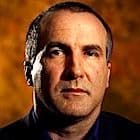
Interviews with Horacio Julio Piña Borrego
Cuba
Smuggling Information
“Every day people ask for more.”
Transcript
In 2011 we tried to use a great idea of Normando’s [Hernandez] that he was pursuing, to create newsletters. Since we did not have means to take them [the people] literature or to show a video, we tried to create a bulletin to distribute among the activists and then to reach the people. However, the resources never arrived. [Normando Hernandez (1969 – ) is a Cuban independent journalist and human rights advocate. From 2003 to 2010, he was a prisoner of conscience after his arrest in the Black Spring crackdown. He has lived in the United States since 2011.]
What Normando [Hernandez] has been doing, what I started to do, is a form of community journalism so that people become aware of what’s happening around them. Previously, we couldn’t do it. I think the ICLEP – the Cuban Institute for the Liberty of Expression and the Press – is doing work that will yield great results in the future. [The Cuban Institute for the Liberty of Expression and the Press is a civil society organization based in Florida that promotes freedom of speech and press in Cuba.]
In fact, every day people ask for more. We have newsletters in Pinar del Rio, Havana, Matanzas, Villa Clara. Every time we talk to someone we are asked for more. They want to know. I think this may be a way of informing, to prepare people for change.
There is information about opinions and news. Mostly news about what is happening nearby. There is no mention of Pinar del Rio in Matanzas [different Cuban provinces], unless it is relevant. The newsletter is for anyone to give their opinion, not only journalists, either anonymously or using their name. In the newsletter you find everything about your community or your area.
Independent journalism relied on [radio] stations. Radio Marti was most commonly heard in our province because it came through most often. Other South Florida stations could not be heard. TV Martí didn’t come through. It is more for the coastal area north of Havana or Matanzas. Mostly our news came from Radio Martí. It was from where the people could learn what was happening around us.
They are limited [however]. The government has been interfering. Havana or Matanzas was where you got better reception of TV Martí.
About Horacio Julio Piña Borrego
Horacio Julio Piña Borrego, the son of an ardent communist, was born in Las Martinas, Cuba in 1966. Horacio first became active in the democratic opposition as a member of the Cuban Pro-Human Rights Party Affiliated with the Sakharov Foundation; in 1999, he became a provincial delegate for the organization in his hometown of Pinar del Rio. Through his activism, he also collected signatures for the Varela Project, an initiative that petitioned the regime to hold open elections and expand civil liberties.
In March 2003, Horacio was detained along with 74 other nonviolent dissidents in a massive government crackdown known as the Black Spring. He received a summary trial in which he was sentenced to 20 years in prison. Horacio was placed in solitary confinement until August 2004, and was subjected to physical and psychological torture throughout his time in prison. In October 2010, the Catholic Church and the Spanish government negotiated the release of the 75 and Horacio went into exile with his family. He lived in Spain as a political refugee until 2011, before settling in the United States.
Horacio is active in the fight for Cuban freedom and democracy; he serves as the Managing Director of the Cuban Institute for Freedom of Expression and Press in Florida.