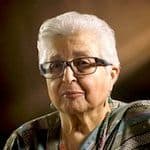
Interviews with Frene Ginwala
South Africa
International Sanctions
“They were making the country ungovernable.”
Transcript
[International sanctions] were critical because South Africa was already heavily in debt and was not getting loans. This was the real – financial sanctions had had that impact. They couldn’t roll over their loans easily, and they were running out of money because what had happened now was they were also trying to upgrade the African areas, the townships, but because very few whites had ever gone into the townships, they had no idea what the conditions were like. And there were newspaper reports in South Africa of the white conscripts who were going in, coming out throwing up and so on because they had never seen the conditions under which African people lived. So this also, now they were trying to buy support. They had to make concessions – they had been spending a lot on white areas, but now they had to do something about trying to change that climate.
[Under apartheid, townships were residential areas designated for non-white groups. Non-whites were prohibited from living in areas reserved for whites.]
Also, by now, they couldn’t use the old arguments that it was only the black people who were going to be affected. They tried to adapt apartheid. It was not possible the way things were. And people in the country were not accepting it anymore. They were making the country ungovernable right across in any way they could.
So this is what was the context and the result of a whole range of measures. Sanctions was one of them.
But the whole question of loans, and loans to South Africa was a major international campaign.
So we were targeting particular companies with all of this, and this whole international network was very important. If it had been just one country, one company, it wouldn’t have worked.
You know, it was – people tended to think of boycotts and things as not buying South African products. Yes, it was there, but that was not enough. It was when you targeted the big companies for their products, when you targeted oil, when you targeted arms, which had already now gone through. There were no arms for South Africa. So those were the things. This was a strategic campaign. There was the popular one.
For example, when Barclay’s Bank in Britain was targeting students for – to open accounts, immediately the British anti-apartheid movement started targeting students to say don’t bank with Barclay’s. When Barclay’s pulled out of South Africa, they said it was the hassle factor. Apart from the student, the fact that by now, and this is something the Americans had started, people bought shares in companies and they went to annual general meetings, raised issues there. In Britain, there was now a law that you had to put in your annual reports any donations made to anyone so that they were forced to declare any support they were giving. This sort of thing built up. It wasn’t done by the ANC as such. It was the broader anti-apartheid movement.
About Frene Ginwala
Frene Ginwala was born in 1932 in Johannesburg. A South African of Indian descent, Ginwala was keenly aware of the role race played in South African society. She studied law at the University of London and then returned to South Africa.
As political tensions rose between the white minority government and non-whites, Ginwala joined the African National Congress (ANC), the country’s main opposition group to the apartheid government. Following the 1960 Sharpeville Massacre, during which police shot at thousands of demonstrators protesting travel restrictions for non-whites, the government banned the ANC. Ginwala was tasked with coordinating the escape of senior ANC leader Oliver Tambo to Tanzania and establishing the organization’s external mission. She wouldn’t return to South Africa for thirty years.
During her exile, Ginwala headed the Political Research Unit in the Office of ANC President Oliver Tambo. She also served as the ANC spokesperson in the United Kingdom, often addressing matters on sanctions against South Africa’s apartheid government.
In 1990, President F.W. de Klerk’s government lifted the ANC ban and Ginwala returned to South Africa. Prior to the country’s first democratic elections in 1994, she helped set up the Women’s National Coalition, which gathered organizations from across the political spectrum to ensure women’s common interests were reflected in South Africa’s post-apartheid constitution. Ginwala was elected to parliament in 1994 where she served as Speaker of the National Assembly until 2004. As the first post-apartheid speaker, she was instrumental in setting a new course for the government, promoting an atmosphere of cooperation and reconciliation.
Since leaving government, Ginwala served as the First Chancellor of one of South Africa’s flagship universities, The University of Kwazula-Natal, until 2009. She has continued promoting democracy, good governance, development and human rights through her participation with various international organizations such as the United Nations and the International Institute for Democracy and Electoral Assistance.