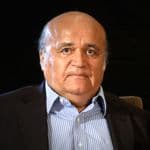
Interviews with Genaro Arriagada
Chile
Transitional Challenges
“Transitions to democracy are very difficult and Chile’s was very difficult.”
Transcript
Transitions to democracy are very difficult and Chile’s was very difficult. In Chile’s case, we won the referendum but Pinochet won forty-three percent of the votes. So, Pinochet was not a minor electoral force.
[Augusto Pinochet (1915-2006) was dictator of Chile between 1973 and 1990.]
Pinochet counted on the support of political parties that still exist today: the Independent Democratic Union and National Renewal. The Chilean Army was not destroyed like in Argentina, where after the Falklands War the army had no prestige.
[The Falklands War was a ten-week war in 1982 between Argentina and the United Kingdom over two British overseas territories in the South Atlantic: the Falkland Islands and South Georgia and the South Sandwich Islands.]
By contrast, in Chile the army had a very hierarchical structure and to us it was our opposition because it was involved in politics. But for a vast part of the population the army was respectable.
It had not been defeated in war… Chile has always had very low levels of corruption. It wasn’t an army with the levels of corruption seen in Nicaragua’s Sandinista Movement or during the time of Batista in Cuba.
[The Sandinista National Liberation Front is a democratic socialist political party in Nicaragua. Its members are called Sandinistas.]
[Fulgencio Batista (1901 – 1973) was the elected President of Cuba from 1940 to 1944, and dictator from 1952 to 1959, before being overthrown as a result of the Cuban Revolution.]
So we had to proceed while trying to achieve a combination of difficult objectives.
One was for the economy not to collapse. During Pinochet’s seventeen years the growth rate was very low. But during Pinochet’s last three years, as a rebound effect to the great [economic] crisis, there had been an annual growth rate of about eight percent.
So we could not come in and dismantle the economy because the people would say: “We had work, we had more under the military”. We had to manage the economy well.
About Genaro Arriagada
Genaro Arriagada Herrera is a Chilean attorney, political scientist, diplomat and politician.
Arriagada was born in 1943 and studied law at the University of Chile, graduating in 1965. He became active in politics and affiliated with the Christian Democratic Party in 1963. He worked on several of the party’s political campaigns. Following the military coup d’état in 1973, the regime of General Augusto Pinochet banned political parties. Arriagada became active in the democratic opposition to the military regime. From 1980 to 1989, he served as vice president of the Christian Democrats.
In 1988, Arriagada was chosen as Executive Secretary of the Concertación, the Coalition of Parties for Democracy, a broad coalition of political parties from across the political spectrum that opposed the military government.
In October 1988, the Pinochet regime called a national referendum asking Chileans whether they wanted to continue the military regime. As Executive Secretary of the Concertación, Arriagada became the director of the historic “No” Campaign, which opposed extending military rule. The opposition organized a large voter registration effort and mounted an upbeat campaign that urged voters to restore democracy to Chile.
As Chile returned to the democratic path, Arriagada served in multiple senior positions. He led Eduardo Frei Ruiz-Tagle’s successful presidential campaign in 1993 and then served as a minister in his government. He also ran the successful presidential campaign of Ricardo Lagos in 1999. In the late 1990s, Arriagada served as Chile’s ambassador to the United States.
Since leaving government service, Arriagada has held a variety of academic positions and has been affiliated with institutions such as the University of the Americas, the Inter-American Dialogue, the Wilson Center, and Harvard University’s Institute of Politics. He has also worked with democratic groups in countries like Bulgaria, Cuba, Nicaragua, Panama, Paraguay and Serbia.