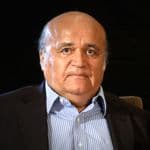
Interviews with Genaro Arriagada
Chile
Separation of Military and Government
“We had to be very careful that the Army did not regain power.”
Transcript
The Chilean transition happened during a period in which the ex-dictator promulgated a constitution that could not be changed, in which he was designated as the commander in chief of the army for eight years, even though he was no longer president.
So we had elected the [new] president of the republic but he [Pinochet] was the commander in chief. This seems strange, but it is relatively normal during transitions. Consider Poland, where the hierarchy of the army was maintained, in spite of the predominance of Solidarity [the Polish Trade Union], of Lech Walesa, of [Bronislaw] Geremek, of so many…
[Lech Walesa (1943 – ) was the leader of Poland’s Solidarity movement that brought down the communist regime. He served as President of Poland from 1990 to 1995.]
[Bronislaw Geremek (1932 – 2008) was a Polish historian and politician. He was an important figure in the Solidarity Movement and in post-communist politics.]
Or in the Sandinistas’ case where Daniel Ortega, when he handed over power to Violeta Chamorro, remained as army commander in chief.
[Daniel Ortega (1945 – ) is a Nicaraguan politician who has been President of Nicaragua since 2007; previously he was President from 1985 to 1990.][Violeta Chamorro (1929 – ) is a Nicaraguan political leader, former president and publisher.]
Consider the tragic experience of the Arab Spring in which the protesters arrive and the Muslim Brotherhood end up in power but the army is untouchable. And in the end, in the case of Egypt, the army regains power.
[The Arab Spring is a revolutionary wave of demonstrations and protests (both non-violent and violent), riots, and civil wars in the Arab world that began in 2010 and spread throughout the countries of the Arab world.] [The Muslim Brotherhood is a transnational Islamist organization which was founded in Egypt in 1928 by the Islamic scholar and schoolteacher Hassan al-Banna.]
So we had to be very careful that the army did not regain power. But it was not easy if we thought we wanted to place the army under civilian control and then prosecute many of the army’s officials (which we did) for human rights violations.
And afterwards we had to keep order in the country to demonstrate that those of us who were newly arrived to power were better able to govern than the right with the military.
About Genaro Arriagada
Genaro Arriagada Herrera is a Chilean attorney, political scientist, diplomat and politician.
Arriagada was born in 1943 and studied law at the University of Chile, graduating in 1965. He became active in politics and affiliated with the Christian Democratic Party in 1963. He worked on several of the party’s political campaigns. Following the military coup d’état in 1973, the regime of General Augusto Pinochet banned political parties. Arriagada became active in the democratic opposition to the military regime. From 1980 to 1989, he served as vice president of the Christian Democrats.
In 1988, Arriagada was chosen as Executive Secretary of the Concertación, the Coalition of Parties for Democracy, a broad coalition of political parties from across the political spectrum that opposed the military government.
In October 1988, the Pinochet regime called a national referendum asking Chileans whether they wanted to continue the military regime. As Executive Secretary of the Concertación, Arriagada became the director of the historic “No” Campaign, which opposed extending military rule. The opposition organized a large voter registration effort and mounted an upbeat campaign that urged voters to restore democracy to Chile.
As Chile returned to the democratic path, Arriagada served in multiple senior positions. He led Eduardo Frei Ruiz-Tagle’s successful presidential campaign in 1993 and then served as a minister in his government. He also ran the successful presidential campaign of Ricardo Lagos in 1999. In the late 1990s, Arriagada served as Chile’s ambassador to the United States.
Since leaving government service, Arriagada has held a variety of academic positions and has been affiliated with institutions such as the University of the Americas, the Inter-American Dialogue, the Wilson Center, and Harvard University’s Institute of Politics. He has also worked with democratic groups in countries like Bulgaria, Cuba, Nicaragua, Panama, Paraguay and Serbia.