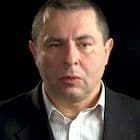
Interviews with Bronislaw Wildstein
Poland
Underground Publications
“We created our own rudimentary printing machines.”
Transcript
Well this is a complicated procedure – everyone tried to get hold of things on their own initiative. For instance, we tried to get things by importing them from the West. These were protein-based polygraphic machines [reference to a polygraph device that produces a copy of a piece of writing simultaneously with the creation of the original using pens and ink] and they were a staple; we assembled them from pieces and we were busy hiding them. Very advanced.
But this was the highest level, this was the last level, this was at the end of the 1970s.
But we started by copying things on a typewriter through carbon paper. We entered into agreements with people from all kinds of plants, and at night we would remove their machines, or even go in and print things right there at their plant.
But we also learned. We created our own rudimentary printing machines; you know using a wooden frame and then the fabric, the same fabric that was used to make stockings and pantyhose. And from that we were able to get the hundred odd or even 200 or more copies per set up. And so we were active, in a manner of speaking in an official way, because we released our names, but the entire process on the other hand, that of printing was highly clandestine – for both printing and distribution.
And there were also various techniques that were used, but the basic principle was that people did not know about it – only a very narrow circle of those who knew our circulation system.
As an example, one of these techniques was to find, to create a covert site, as in a basement for example – which was used for the printing itself, where these people would stay cooped up throughout the time that it took to print out some large edition. This might take several days in a row, someone would prepare food and drink for them, somebody else would get it out to them. And then after those several days they would emerge from there, and then others would come take their place, would remove those things, and then would convey to them wherever they needed to go.
About Bronislaw Wildstein
Bronislaw Wildstein was born on June 11, 1952 in Olsztyn, Poland. His father was a military physician and his mother was a member of the anticommunist Home Army, a group created to oppose the Nazi occupation of Poland. Wildstein studied at Jagiellonian University from 1971 to 1980. In the early 1970s, Wildstein joined the Socialist Union of Polish Students, which began his career in the opposition movement. Joining with other students, he printed and distributed anticommunist leaflets, collected money for imprisoned workers, and drafted an appeal to release workers arrested in the antigovernment protests of 1976.
In 1977, Wildstein cofounded the Student Committee of Solidarity, an opposition group formed in response to the unsolved death of student activist Stanislaw Pyjas. Many students suspected Pyjas’ death was orchestrated by government agents. The Student Committee of Solidarity began printing and distributing anticommunist literature in secret. Wildstein’s clandestine printing even landed him in prison for a short time.
In 1980, Wildstein became involved in the Lenin Shipyard strike in Gdansk, a demonstration by workers that attracted national, popular support and forced the communists to the negotiate with the strikers. The Lenin Shipyard strike also resulted in the formation of Solidarity, the first independent labor union in the communist world that transformed into a nationwide freedom movement.
Prior to the Polish government’s declaration of martial law in 1981, which was a means to crackdown on political opposition, Wildstein had secured a passport and left Poland for Western Europe. During his time in the West, he served as an advocate for the freedom movement in Poland and established foreign contacts for Solidarity. While abroad, Wildstein also cofounded Kontakt, an anticommunist periodical, and worked for Radio Free Europe.
After the fall of communism in Poland, Wildstein returned to his country and worked as a journalist for several daily papers, including Zycie Warszawy and Rzeczpospolita. In 2005, Wildstein became entangled in the issue of transitional justice when he obtained and distributed a list (often referred to as “Wildstein’s List”) to fellow journalists containing both the names of collaborators and victims of the communist-era secret police.
Wildstein continues his work as a journalist in Poland.