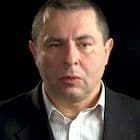
Interviews with Bronislaw Wildstein
Poland
Before Solidarity Part 1
“We started as an independent initiative to collect money for imprisoned workers.”
Transcript
We started our opposition activities even before the establishment of KOR [The Workers’ Defense Committee (KOR) was an anticommunist underground civil society organization in the 1970s, formed to provide assistance to laborers and others persecuted by the government. Many of Solidarity’s leaders were also active in KOR.]. I do not want to seem to be creating a legend, but the primary reason that I went to college was I was searching for a social milieu to create a kind of opposition center.
In 1973, when the Union of Polish Students was transformed into the Socialist Union of Polish Students, we drafted the first leaflets, I was one of the creators of that, and we threw them about, we unsuccessfully tried to create an outdoor rally. And this was really my first initiation into the opposition, so to speak.
At that time, the police tried, but they did not find us, but they did find us on the cusp of May/June of 1976, after we created this group of sorts – at the time it was a very informal group which primarily discussed the options of what could be done as part of protesting against the system.
And that was the first time that I found my way into jail.
So that first arrest and that difficult interrogation caused to a large extent the breakup of our group.
But on the other hand, some of us, a part of the group remained, those who really wanted to be active, and at the moment when we found out about the creation of the Workers’ Defense Committee (KOR), we started, as an independent initiative, to collect money for imprisoned workers and to distribute the leaflets which we were receiving from Warsaw.
I need to emphasize, at that time I was living in Krakow. But because I had been thrown out of college in the last year of my studies in 1976, we met up with another group of opposition-minded students, about whom we had not previously known, which was connected to the Catholic academic, social environment.
Toward the end of 1976 we began to coalesce into a more or less coherent group, which attempted to reprint various texts and contemplated and discussed various forms of activity.
The first breakthrough moment for us was when we decided to openly collect signatures on an appeal we had drafted related to the release of workers arrested in the protests of 1976 [Polish worker organized strikes in protest of rising prices], and a demand for punishment of those who were guilty of their persecution and torture.
So then we collected 517 signatures from students and we were incredibly proud – for all of us this was astonishing that so many people had signed it.
And even the fact that I remember that number today, I think is significant. And so at that time we started to meet with the members of KOR, and also we developed steady contacts with them.
About Bronislaw Wildstein
Bronislaw Wildstein was born on June 11, 1952 in Olsztyn, Poland. His father was a military physician and his mother was a member of the anticommunist Home Army, a group created to oppose the Nazi occupation of Poland. Wildstein studied at Jagiellonian University from 1971 to 1980. In the early 1970s, Wildstein joined the Socialist Union of Polish Students, which began his career in the opposition movement. Joining with other students, he printed and distributed anticommunist leaflets, collected money for imprisoned workers, and drafted an appeal to release workers arrested in the antigovernment protests of 1976.
In 1977, Wildstein cofounded the Student Committee of Solidarity, an opposition group formed in response to the unsolved death of student activist Stanislaw Pyjas. Many students suspected Pyjas’ death was orchestrated by government agents. The Student Committee of Solidarity began printing and distributing anticommunist literature in secret. Wildstein’s clandestine printing even landed him in prison for a short time.
In 1980, Wildstein became involved in the Lenin Shipyard strike in Gdansk, a demonstration by workers that attracted national, popular support and forced the communists to the negotiate with the strikers. The Lenin Shipyard strike also resulted in the formation of Solidarity, the first independent labor union in the communist world that transformed into a nationwide freedom movement.
Prior to the Polish government’s declaration of martial law in 1981, which was a means to crackdown on political opposition, Wildstein had secured a passport and left Poland for Western Europe. During his time in the West, he served as an advocate for the freedom movement in Poland and established foreign contacts for Solidarity. While abroad, Wildstein also cofounded Kontakt, an anticommunist periodical, and worked for Radio Free Europe.
After the fall of communism in Poland, Wildstein returned to his country and worked as a journalist for several daily papers, including Zycie Warszawy and Rzeczpospolita. In 2005, Wildstein became entangled in the issue of transitional justice when he obtained and distributed a list (often referred to as “Wildstein’s List”) to fellow journalists containing both the names of collaborators and victims of the communist-era secret police.
Wildstein continues his work as a journalist in Poland.