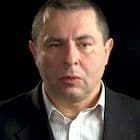
Interviews with Bronislaw Wildstein
Poland
Pope John Paul II
“John Paul II’s first pilgrimage to Poland in June of 1979 – this was a rapid national renaissance.”
Transcript
I think we all realize that the impact [Pope] John Paul II [first Polish pope who led the Catholic Church 1978-2005] had on the emergence of Solidarity [a labor union formed by Gdansk ship builders that transformed into a nationwide resistance movement] was absolutely fundamental. John Paul II’s first pilgrimage to Poland in June of 1979 – this was a rapid national renaissance for those few days. People went out into the streets, they began to feel free, they saw that they are in this together. Afterwards, – or before then – well, people thought that after that things could no longer go back to the way that they were before. But then the Pope left and things went back to what they were before. So this was a deep feeling of hopelessness, sort of a hangover if you like.
I remember in the beginning of 1980, when in the opposition circles we were racking our brains as to what could be done – since things were becoming harder and harder due to the fact that pressure from the authorities was heavier and heavier, they were locking us up more and more often, and for longer periods – so things were going downhill. And no one could predict what was to happen – the strikes, in their own way, re-evoked the spirit of that particular time of pilgrimage. Of course I think that is what they called up was that renaissance of Polish republicanism, which was reinvigorated by the Pope when he spoke those words, “Let your Spirit descend and renew the face of this land.” [From Pope John Paul II’s homily during his Holy Mass in Warsaw on June 2, 1979]
About Bronislaw Wildstein
Bronislaw Wildstein was born on June 11, 1952 in Olsztyn, Poland. His father was a military physician and his mother was a member of the anticommunist Home Army, a group created to oppose the Nazi occupation of Poland. Wildstein studied at Jagiellonian University from 1971 to 1980. In the early 1970s, Wildstein joined the Socialist Union of Polish Students, which began his career in the opposition movement. Joining with other students, he printed and distributed anticommunist leaflets, collected money for imprisoned workers, and drafted an appeal to release workers arrested in the antigovernment protests of 1976.
In 1977, Wildstein cofounded the Student Committee of Solidarity, an opposition group formed in response to the unsolved death of student activist Stanislaw Pyjas. Many students suspected Pyjas’ death was orchestrated by government agents. The Student Committee of Solidarity began printing and distributing anticommunist literature in secret. Wildstein’s clandestine printing even landed him in prison for a short time.
In 1980, Wildstein became involved in the Lenin Shipyard strike in Gdansk, a demonstration by workers that attracted national, popular support and forced the communists to the negotiate with the strikers. The Lenin Shipyard strike also resulted in the formation of Solidarity, the first independent labor union in the communist world that transformed into a nationwide freedom movement.
Prior to the Polish government’s declaration of martial law in 1981, which was a means to crackdown on political opposition, Wildstein had secured a passport and left Poland for Western Europe. During his time in the West, he served as an advocate for the freedom movement in Poland and established foreign contacts for Solidarity. While abroad, Wildstein also cofounded Kontakt, an anticommunist periodical, and worked for Radio Free Europe.
After the fall of communism in Poland, Wildstein returned to his country and worked as a journalist for several daily papers, including Zycie Warszawy and Rzeczpospolita. In 2005, Wildstein became entangled in the issue of transitional justice when he obtained and distributed a list (often referred to as “Wildstein’s List”) to fellow journalists containing both the names of collaborators and victims of the communist-era secret police.
Wildstein continues his work as a journalist in Poland.