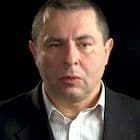
Interviews with Bronislaw Wildstein
Poland
Impact of Solidarity
“It meant the first social institution with complete independence from the state, a breakthrough phenomenon.”
Transcript
Solidarity [a labor union formed by Gdansk ship builders that transformed into a nationwide resistance movement] simply had to be created in the form of labor union. Especially since it emerged out of a strike – so that was self-understood. But in reality, this was a grand, national, anticommunist movement. And then we look at it from the distance of time, I think we did not think this through sufficiently, we had not analyzed this extraordinary phenomenon. And I also think that great, absolutely unprecedented historically – and not just in Polish history either – what was reborn was a spirit of republicanism of the Polish nation. And it was a great republican confederation of Polish people. And if we stop to think that Solidarity, if we add up the numbers of farmers, Solidarity, and the independent student union, which were organizations which collaborated very closely, albeit in different social circles, but they were components of the same broad movement, then this added up to over 10 million people in Poland.
So you have to realize that at the time those people who participated in the moment were taking on a great risk – no one realized what the ultimate outcome would be – no one knew whether or not the Soviets would eventually enter or not, whether or not there would be a massacre on the scale of Hungary in 1956 for instance [a nationwide revolt against the Soviet-backed government of Hungary that was brutally crushed by the Soviet Army]. The initial demands by the [striking] workers in August 1980 [at the Lenin Shipyard in Gdansk] were typical – they were economic in nature – but very soon they changed their nature quite dramatically. What followed were demands for freedom of speech, liberation of political prisoners, things which completely exceed the typical demands of a working class movement. The second phase of the strike at the shipyard, and in Poland more broadly, was one of solidarity with shipyard workers – after all, they had achieved everything that they asked for. So people went out on strike as a sign of solidarity with others – demanding things that were demanded in common with the others, they demanded free labor unions. What did that mean? It meant the first social institution with complete independence from the state, a breakthrough phenomenon.
After the Gdansk agreements were signed [negotiations between Lenin Shipyard workers and communist authorities that allowed for the formation of independent labor unions], other strikes also broke out in places where people laid off demands for some narrow, more particular issues. And each of them one-by-one gave up their strike, being convinced that this was not about their particular interests, but about a common interest. That is why it is impossible to squeeze the Solidarity movement into any modern ideological structure. Because for sure, it did make reference to the national tradition, to religion, but that is not enough to characterize it as far as an ideological nature.
About Bronislaw Wildstein
Bronislaw Wildstein was born on June 11, 1952 in Olsztyn, Poland. His father was a military physician and his mother was a member of the anticommunist Home Army, a group created to oppose the Nazi occupation of Poland. Wildstein studied at Jagiellonian University from 1971 to 1980. In the early 1970s, Wildstein joined the Socialist Union of Polish Students, which began his career in the opposition movement. Joining with other students, he printed and distributed anticommunist leaflets, collected money for imprisoned workers, and drafted an appeal to release workers arrested in the antigovernment protests of 1976.
In 1977, Wildstein cofounded the Student Committee of Solidarity, an opposition group formed in response to the unsolved death of student activist Stanislaw Pyjas. Many students suspected Pyjas’ death was orchestrated by government agents. The Student Committee of Solidarity began printing and distributing anticommunist literature in secret. Wildstein’s clandestine printing even landed him in prison for a short time.
In 1980, Wildstein became involved in the Lenin Shipyard strike in Gdansk, a demonstration by workers that attracted national, popular support and forced the communists to the negotiate with the strikers. The Lenin Shipyard strike also resulted in the formation of Solidarity, the first independent labor union in the communist world that transformed into a nationwide freedom movement.
Prior to the Polish government’s declaration of martial law in 1981, which was a means to crackdown on political opposition, Wildstein had secured a passport and left Poland for Western Europe. During his time in the West, he served as an advocate for the freedom movement in Poland and established foreign contacts for Solidarity. While abroad, Wildstein also cofounded Kontakt, an anticommunist periodical, and worked for Radio Free Europe.
After the fall of communism in Poland, Wildstein returned to his country and worked as a journalist for several daily papers, including Zycie Warszawy and Rzeczpospolita. In 2005, Wildstein became entangled in the issue of transitional justice when he obtained and distributed a list (often referred to as “Wildstein’s List”) to fellow journalists containing both the names of collaborators and victims of the communist-era secret police.
Wildstein continues his work as a journalist in Poland.