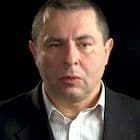
Interviews with Bronislaw Wildstein
Poland
Solidarity
Wildstein describes his involvement in Solidarity.
Transcript
We [opposition activists] made reference to the Helsinki Accords, we cited them and declared that we had certain rights arising from them. [The Helsinki Accords were an international treaty signed by 35 countries in 1975. They guaranteed basic human rights and promoted cooperation between the Soviet bloc and western nations. Dissidents and activists in the communist countries used their governments’ signatures to the treaty to advocate for freedom and human rights.]
But I actually do not think that the very signing of the Accords would have caused the authorities to become relatively tolerant toward the opposition.
Then I have to note that this relative tolerance, is a highly specific concept, because people would be thrown out of work, thrown out of college, be locked up regularly, would get beaten – which happened not all that rarely – and sometimes the beatings were severe. But on the other hand, we were not locked up all the time, we would get out and would be able to function.
The very signing of the Helsinki Accords by the authorities was an act that pressed their dependence on, their economic dependence on the West. I was very involved in the creation of Solidarity [a labor union formed by Gdansk ship builders that transformed into a nationwide resistance movement], and I was a key presence at the shipyard during the strike for the initial negotiations there [August 1980 strike at the Lenin Shipyard in Gdansk].
I was then arrested, then I was put in prison after I had stepped out to take care of some business related to clandestine printing, together with some friends.
And so I left prison on September 1 [1980]. And immediately I became very involved in creating — all of us in Krakow were very involved — in creating Solidarity, and to a great extent the Student Committee of Solidarity (SCS) was the very first initiator of creating Solidarity. They released leaflets. We organized sites for consultations and discussions, and from there things really spun up.
And the story was very similar with the independent union students, which was in a way the implementation of our demands, because on the one hand it was one of the major demands of ours, of the SCS, was the creation of a nonpolitical student organization, independent of the authorities.
For myself, my role in Solidarity was an expert – a consultant – because I could not be a formal member since in my past I did not have any employment. I had held jobs of sorts, but I was never a full-time employee of anything, and when I was, I was immediately thrown out.
About Bronislaw Wildstein
Bronislaw Wildstein was born on June 11, 1952 in Olsztyn, Poland. His father was a military physician and his mother was a member of the anticommunist Home Army, a group created to oppose the Nazi occupation of Poland. Wildstein studied at Jagiellonian University from 1971 to 1980. In the early 1970s, Wildstein joined the Socialist Union of Polish Students, which began his career in the opposition movement. Joining with other students, he printed and distributed anticommunist leaflets, collected money for imprisoned workers, and drafted an appeal to release workers arrested in the antigovernment protests of 1976.
In 1977, Wildstein cofounded the Student Committee of Solidarity, an opposition group formed in response to the unsolved death of student activist Stanislaw Pyjas. Many students suspected Pyjas’ death was orchestrated by government agents. The Student Committee of Solidarity began printing and distributing anticommunist literature in secret. Wildstein’s clandestine printing even landed him in prison for a short time.
In 1980, Wildstein became involved in the Lenin Shipyard strike in Gdansk, a demonstration by workers that attracted national, popular support and forced the communists to the negotiate with the strikers. The Lenin Shipyard strike also resulted in the formation of Solidarity, the first independent labor union in the communist world that transformed into a nationwide freedom movement.
Prior to the Polish government’s declaration of martial law in 1981, which was a means to crackdown on political opposition, Wildstein had secured a passport and left Poland for Western Europe. During his time in the West, he served as an advocate for the freedom movement in Poland and established foreign contacts for Solidarity. While abroad, Wildstein also cofounded Kontakt, an anticommunist periodical, and worked for Radio Free Europe.
After the fall of communism in Poland, Wildstein returned to his country and worked as a journalist for several daily papers, including Zycie Warszawy and Rzeczpospolita. In 2005, Wildstein became entangled in the issue of transitional justice when he obtained and distributed a list (often referred to as “Wildstein’s List”) to fellow journalists containing both the names of collaborators and victims of the communist-era secret police.
Wildstein continues his work as a journalist in Poland.