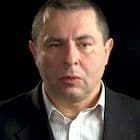
Interviews with Bronislaw Wildstein
Poland
Martial Law
“At the beginning, we were shocked at how easily martial law was introduced.”
Transcript
It is difficult for me to describe the situation in the period of the 1980s, because after all I was outside. [During the period of martial law, December 1981- July 1983, Mr. Wildstein was traveling Western Europe building support for Poland’s freedom movement. Martial law in Poland was declared by the military government of General Wojciech Jaruzelski in an attempt to crush political opposition. Thousands of opposition activists were jailed without being charged.] But I was watching things very carefully, yes. I was in ongoing contact; I collected information; I was publishing periodicals all the time, I was receiving materials which were published in the underground press in Poland, so yes I did have some overview of Poland´s reality. At the beginning we were all grimly shocked at how relatively easy it seemed to have been to introduce martial law. After all, the Poles were worn down by this year and a half of uncertainty, this pressure from the authorities, poverty, etc. etc.
But what transpired very soon was that the opposition movement which had been created was very strong. And again, even on a worldwide scale, this type of opposition movement, of this size, was unique. [02:06:54] So that demonstrated that Solidarity [a labor union formed by Gdansk ship builders that transformed into a nationwide resistance movement], could be beaten but not broken. So thereby, the Polish nation could not be broken.
If we take a look, for instance, at the end of the 1980s, when the authorities made a decision to negotiate with the opposition, then what was said was, “Bah, the strikes are meager, this opposition is weak.” [In 1989, Poland’s communist government entered into negotiations with Solidarity known as the Round Table Talks. This resulted in semi-free elections on June 4, 1989 in which Solidarity scored a significant victory and led to the formation of the first non-communist government in the Soviet bloc.] But if you look into the documents of the security service, which was the best informed agency in the land, then what they were writing about is a swelling up of, no a wave of rebellion among the youngest, among the young workers and the college students, which brings to mind the wave of 1980 but possibly more powerful [1980 was the year of the Lenin Shipyard strike that led to the formation of Solidarity]. [02:08:48] So the security services were frightened and they demanded that something be done. And all this is reflected in the documents.
In a communist system, any totalitarian system, the logic is very simple. Of course, those in power are afraid of their society. So they respond by causing fear. And so this is a cycle which grows on itself. So this is a rather typical paradigm for a totalitarian system. On the other hand, in Poland, martial law actually did cause, in some major way, and as far as people from Solidarity were concerned, a large segment of them were deprived of hope. They sunk into a type of pessimism. The younger ones did not remember martial law all that well because they were children at the time. They were free from that trauma of martial law.
About Bronislaw Wildstein
Bronislaw Wildstein was born on June 11, 1952 in Olsztyn, Poland. His father was a military physician and his mother was a member of the anticommunist Home Army, a group created to oppose the Nazi occupation of Poland. Wildstein studied at Jagiellonian University from 1971 to 1980. In the early 1970s, Wildstein joined the Socialist Union of Polish Students, which began his career in the opposition movement. Joining with other students, he printed and distributed anticommunist leaflets, collected money for imprisoned workers, and drafted an appeal to release workers arrested in the antigovernment protests of 1976.
In 1977, Wildstein cofounded the Student Committee of Solidarity, an opposition group formed in response to the unsolved death of student activist Stanislaw Pyjas. Many students suspected Pyjas’ death was orchestrated by government agents. The Student Committee of Solidarity began printing and distributing anticommunist literature in secret. Wildstein’s clandestine printing even landed him in prison for a short time.
In 1980, Wildstein became involved in the Lenin Shipyard strike in Gdansk, a demonstration by workers that attracted national, popular support and forced the communists to the negotiate with the strikers. The Lenin Shipyard strike also resulted in the formation of Solidarity, the first independent labor union in the communist world that transformed into a nationwide freedom movement.
Prior to the Polish government’s declaration of martial law in 1981, which was a means to crackdown on political opposition, Wildstein had secured a passport and left Poland for Western Europe. During his time in the West, he served as an advocate for the freedom movement in Poland and established foreign contacts for Solidarity. While abroad, Wildstein also cofounded Kontakt, an anticommunist periodical, and worked for Radio Free Europe.
After the fall of communism in Poland, Wildstein returned to his country and worked as a journalist for several daily papers, including Zycie Warszawy and Rzeczpospolita. In 2005, Wildstein became entangled in the issue of transitional justice when he obtained and distributed a list (often referred to as “Wildstein’s List”) to fellow journalists containing both the names of collaborators and victims of the communist-era secret police.
Wildstein continues his work as a journalist in Poland.