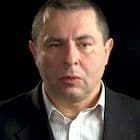
Interviews with Bronislaw Wildstein
Poland
Background
Wildstein discusses some of the factors that led him down the road of dissidence.
Transcript
My father was a doctor, a military physician.
He was also the commander of a military hospital. In the old times, before the war [World War II], he was connected with the communist movement. After the war he was disillusioned but, in a manner of speaking, he was still connected to the broadly understood establishment. In 1967 he was thrown out of the military, as part of the anti-Semitic purges. Earlier he was fired. One year later he passed away. My mother was – she came from a rural family, she was the first in her family to break out; to graduate from high school. She was a nurse; she later studied medicine, but did not complete that.
One more important thing that I need to add is that my mother served in the Home Army [an underground resistance movement organized against the Nazi occupation of Poland]. So all the more, she was a dyed in the wool anticommunist.
In truth there was a kind of a tension in my home. But you can hardly say these were political discussions, because my father really did not defend the communist system.
Never in my life did I think – I mean for a very long time in my life I never gave any thought to journalism. Journalism in communist Poland was first and foremost propaganda. I always knew that I wanted to be a writer. And I did write. I wanted to study philosophy, but after 1968 this was limited exclusively to postgraduate studies, so as a result I studied in the Polish department primarily because these were literary, or comparative culture studies, you could say.
As far as journalism is concerned, I started writing articles for the underground press which I was involved in co-creating. Ever since 1967, but I did not really treat this as journalism at the time, I treated this as a form of anticommunist struggle.
In the middle of the 1980s, while in France, when I was the editor in chief and the creator of a Solidarity [a labor union formed by Gdansk ship builders that transformed into a nationwide resistance movement] monthly called Contact, as well as a correspondent of Radio Free Europe, so in about the middle of the 1980s, I realized that, well, I probably am a journalist.
About Bronislaw Wildstein
Bronislaw Wildstein was born on June 11, 1952 in Olsztyn, Poland. His father was a military physician and his mother was a member of the anticommunist Home Army, a group created to oppose the Nazi occupation of Poland. Wildstein studied at Jagiellonian University from 1971 to 1980. In the early 1970s, Wildstein joined the Socialist Union of Polish Students, which began his career in the opposition movement. Joining with other students, he printed and distributed anticommunist leaflets, collected money for imprisoned workers, and drafted an appeal to release workers arrested in the antigovernment protests of 1976.
In 1977, Wildstein cofounded the Student Committee of Solidarity, an opposition group formed in response to the unsolved death of student activist Stanislaw Pyjas. Many students suspected Pyjas’ death was orchestrated by government agents. The Student Committee of Solidarity began printing and distributing anticommunist literature in secret. Wildstein’s clandestine printing even landed him in prison for a short time.
In 1980, Wildstein became involved in the Lenin Shipyard strike in Gdansk, a demonstration by workers that attracted national, popular support and forced the communists to the negotiate with the strikers. The Lenin Shipyard strike also resulted in the formation of Solidarity, the first independent labor union in the communist world that transformed into a nationwide freedom movement.
Prior to the Polish government’s declaration of martial law in 1981, which was a means to crackdown on political opposition, Wildstein had secured a passport and left Poland for Western Europe. During his time in the West, he served as an advocate for the freedom movement in Poland and established foreign contacts for Solidarity. While abroad, Wildstein also cofounded Kontakt, an anticommunist periodical, and worked for Radio Free Europe.
After the fall of communism in Poland, Wildstein returned to his country and worked as a journalist for several daily papers, including Zycie Warszawy and Rzeczpospolita. In 2005, Wildstein became entangled in the issue of transitional justice when he obtained and distributed a list (often referred to as “Wildstein’s List”) to fellow journalists containing both the names of collaborators and victims of the communist-era secret police.
Wildstein continues his work as a journalist in Poland.