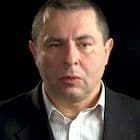
Interviews with Bronislaw Wildstein
Poland
Before Solidarity Part 2
“A totalitarian system destroys all social bonds and leaves the individual alone to face oppressive authority.”
Transcript
And in May of 1977, exactly on May 7 of 1977, a close friend of mine was murdered, Stanislaw Pyjas, who was a prominent member of this opposition group, killed by the political police. [Stanislaw Pyjas was a student at the Jagiellonian University in Krakow. His 1977 death was widely attributed to the secret police and became a rallying point for anticommunist students.] So at that time, we created or we organized a demonstration, because this was happening in a period of the so-called “Juvenilia”, or annual student revelry, demonstrations which lasted several days, in which a few thousand people participated, and the upshot was that we created a student solidarity committee, by now in a sort of official way. So we officially revealed our names, our objectives, with addresses and such.
So we take pride in the fact that we were the first to introduce this term of “solidarity” into political circulation, in the modern times anyway.
But our objective was, and what we explained to people, was that a totalitarian system destroys all social bonds and leaves the individual alone to face oppressive authority. And so what needs to be done is social solidarity needs to be reconstructed in order to face up to the oppressive authority.
Later on, there were numerous such student committees in Polish cities, or in a majority of the larger Polish cities. But we were the primary center of opposition in the city of Krakow. We collaborated with other opposition organizations, primarily with the KOR [Workers’ Defense Committee, an anticommunist underground civil society organization in the 1970s, formed to provide assistance to laborers and others persecuted by the government. Many of Solidarity’s leaders were also active in KOR.], as the most significant one at the time. And all the way up to the creation of Solidarity [a labor union formed by Gdansk ship builders that transformed into a nationwide resistance movement], and the independent student union, we sort of co-created these organizations in Krakow, and the independent student union on a nationwide scale.
About Bronislaw Wildstein
Bronislaw Wildstein was born on June 11, 1952 in Olsztyn, Poland. His father was a military physician and his mother was a member of the anticommunist Home Army, a group created to oppose the Nazi occupation of Poland. Wildstein studied at Jagiellonian University from 1971 to 1980. In the early 1970s, Wildstein joined the Socialist Union of Polish Students, which began his career in the opposition movement. Joining with other students, he printed and distributed anticommunist leaflets, collected money for imprisoned workers, and drafted an appeal to release workers arrested in the antigovernment protests of 1976.
In 1977, Wildstein cofounded the Student Committee of Solidarity, an opposition group formed in response to the unsolved death of student activist Stanislaw Pyjas. Many students suspected Pyjas’ death was orchestrated by government agents. The Student Committee of Solidarity began printing and distributing anticommunist literature in secret. Wildstein’s clandestine printing even landed him in prison for a short time.
In 1980, Wildstein became involved in the Lenin Shipyard strike in Gdansk, a demonstration by workers that attracted national, popular support and forced the communists to the negotiate with the strikers. The Lenin Shipyard strike also resulted in the formation of Solidarity, the first independent labor union in the communist world that transformed into a nationwide freedom movement.
Prior to the Polish government’s declaration of martial law in 1981, which was a means to crackdown on political opposition, Wildstein had secured a passport and left Poland for Western Europe. During his time in the West, he served as an advocate for the freedom movement in Poland and established foreign contacts for Solidarity. While abroad, Wildstein also cofounded Kontakt, an anticommunist periodical, and worked for Radio Free Europe.
After the fall of communism in Poland, Wildstein returned to his country and worked as a journalist for several daily papers, including Zycie Warszawy and Rzeczpospolita. In 2005, Wildstein became entangled in the issue of transitional justice when he obtained and distributed a list (often referred to as “Wildstein’s List”) to fellow journalists containing both the names of collaborators and victims of the communist-era secret police.
Wildstein continues his work as a journalist in Poland.