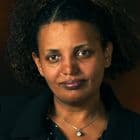
Interviews with Birtukan Midekssa
Ethiopia · Interviewed October 3, 2012
The 2005 Elections
The regime had never seen that kind of excitement and turnout from the public.
Transcript
In terms of announcing the election results in 2005, you know, there is, you know, a significant delay in terms of announcing the result, and it took the electoral board months to announce all the results. But, you know, the whole problem, you know, started to occur in the counting process, you know. The election day, it came as a surprise for every actor, for the opposition, for the governing party, for – even the observers, for the international observers. You know, the turnout was huge. You know, people stayed in line for the whole day to cast their ballots. And everything was peaceful and civil. So that was telling for the governing party, you know.
They have been having elections for, like, two, three times, even in the general election. If you include local elections, that would be more. So they never saw, the regime never saw that that kind of excitement and that kind of turnout coming from the public. So they knew it’s not about them. It’s about opposition. It’s about, you know, protests. So, you know, they acted immediately. You know, they stopped the counting process, especially in the rural areas. So a lot of maneuvering happened. And the election poll board was not willing to intervene and, you know, to take action to stop that kind of, you know, illegitimate intervention from the governing party.
So everything went wrong after that time on. And even the prime minister, you know, he was not hesitant, you know, to declare a state of emergency on the day of election. He just came out and say, OK, you had what you had, that was great, but from this time on, no, it’s enough, you know. You are not allowed to get together to assemble or to demonstrate. Everything was banned. And he doesn’t have any constitutional right to do so. It’s the right of the parliament, and if he wants to do it, he has to get some kind of approval from the parliament.
But, you know, those processes, those legal process are not something to worry about for a regime like this. So the whole environment was changed. So it was frustrating in a way, and it was a very dramatic development. You know, when you compare it what we had before the election day, you know, people were excited. Even, like, a week before the election, my party was able to stage – get a demonstration of millions of people in Addis. You know, that is, you know, historic, and, you know, that was exciting for, you know, the party members, you know, the regular citizens.
We never had such a thing. You know, that was a new experience. And we did it in a very civil, peaceful way, just to express our views, just to express our protests just peacefully. So from that, we deteriorate to, you know, the closing down of the political space. And, you know, even after a month or so, even the security forces clashed with our supporters. And, you know, they killed people, arrested people. You know, things turned out to be violent then, you know.
About Birtukan Midekssa
Birtukan Midekssa is a former federal judge and leader of the pro-democracy opposition movement in Ethiopia.
Hailed as the Aung San Suu Kyi of her country, she was sentenced to life in prison in 2005 after her party, the Coalition for Unity and Democracy, won an unprecedented number of seats in parliamentary elections. After eighteen months in prison, she was pardoned in 2007 following a series of high-level negotiations. Upon her release, she founded the Unity for Democracy and Justice Party (UDJ) and was elected its first chairperson. In 2008, she was rearrested for allegedly having violated the terms of her pardon and remained in prison for almost two more years. In 2010, she was shortlisted for the European Parliament’s 2010 Sakharov Prize for Freedom of Thought.
Prior to entering politics, Ms. Midekssa served as a defense attorney and federal judge, rendering numerous court decisions in support of the rule of law and in defense of fundamental constitutional liberties. She drew the ire of the Ethiopian government when she presided as a judge in a high profile corruption case involving the former defense minister, Siye Abraha. Ms. Midekssa released Abraha for lack of evidence, but the government immediately rearrested him and sent him to jail for seven years. The government’s contempt for the rule of law helped motivate Birtukan Midekssa to become active in politics.
She was selected as a Reagan-Fascell Democracy Fellow for 2011-2012 at the National Endowment for Democracy and as a Scholar at Risk Fellow at the W.E.B. DuBois Institute at Harvard University for 2012 – 2013.