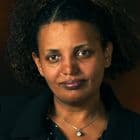
Interviews with Birtukan Midekssa
Ethiopia · Interviewed October 3, 2012
Human Rights in Ethiopia
It was a story of persecution. It was a story of repression.
Transcript
The basic rights, the basic civil liberties were recognized, you know, by the law of the country. And freedom was heralded, you know, for the opposition, for the press, for the civil society. We were told that this is, you know, the era of being free and, you know, operating free without any, you know, illegitimate restriction. But, you know, we didn’t have a chance to live in that kind of environment for long. Immediately – probably after a month– some months or a year, you know, the government was blunt. It started serious persecution against the political party members, thousands of them.
And the journalists who were publishing their own newspapers were to go to prison time and again, and the civil society, you know, were under scrutiny for their operation and everything. So, the last two decades in terms of human rights protection and in terms of, you know, civil liberties, it couldn’t characterized as, you know, a free environment at all.
It was a story of persecution. It was a story of repression. Of course, too many people, thousands of people, you know, were sent to prison. You know, hundreds of them were killed. And, you know, journalists and political opposition leaders and civil society people, everybody were subject to this kind of, you know, repression at different times.
About Birtukan Midekssa
Birtukan Midekssa is a former federal judge and leader of the pro-democracy opposition movement in Ethiopia.
Hailed as the Aung San Suu Kyi of her country, she was sentenced to life in prison in 2005 after her party, the Coalition for Unity and Democracy, won an unprecedented number of seats in parliamentary elections. After eighteen months in prison, she was pardoned in 2007 following a series of high-level negotiations. Upon her release, she founded the Unity for Democracy and Justice Party (UDJ) and was elected its first chairperson. In 2008, she was rearrested for allegedly having violated the terms of her pardon and remained in prison for almost two more years. In 2010, she was shortlisted for the European Parliament’s 2010 Sakharov Prize for Freedom of Thought.
Prior to entering politics, Ms. Midekssa served as a defense attorney and federal judge, rendering numerous court decisions in support of the rule of law and in defense of fundamental constitutional liberties. She drew the ire of the Ethiopian government when she presided as a judge in a high profile corruption case involving the former defense minister, Siye Abraha. Ms. Midekssa released Abraha for lack of evidence, but the government immediately rearrested him and sent him to jail for seven years. The government’s contempt for the rule of law helped motivate Birtukan Midekssa to become active in politics.
She was selected as a Reagan-Fascell Democracy Fellow for 2011-2012 at the National Endowment for Democracy and as a Scholar at Risk Fellow at the W.E.B. DuBois Institute at Harvard University for 2012 – 2013.