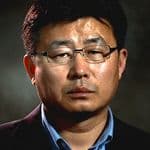
Interviews with Ahn Myeong Chul
North Korea · Interviewed August 4, 2014
What is freedom?
“Freedom brings responsibilities.”
Transcript
I want to provide you a very personal definition of freedom. For me, freedom means happiness. I say this because, when I was back in North Korea, I never experienced freedom at all.
When I crossed the border to the south, I had a hard time understanding what it meant, at first so much that I didn’t even know how to enjoy freedom.
After spending much time here [in South Korea], I now know that freedom means being able to choose and with those choices come responsibilities so freedom often is linked with personal happiness for me.
In North Korea, you are punished for disobeying authority orders and guidelines. While in North Korea, I perceived freedom as being something bad.
Freedom was considered to be a poison for maintaining the regime, so it was something to be denounced.
My understanding of freedom while in North Korea is very different from my understanding now. When I was in North Korea, freedom was closely linked with things I was not allowed to do, so my definition of freedom was the same as what the authorities defined it to be.
Now that I am in South Korea, I understand that freedom brings responsibilities. It is something that individuals can choose. Freedom is about individual choice.
About Ahn Myeong Chul
Ahn Myeong Chul was born in North Hamgyong Province in North Korea. As a teenager, he was the only person from his province selected to serve as a political prison camp guard. Ahn worked in several camps for a period of eight years where he was brainwashed into believing that political prisoners were enemies of the state unworthy of sympathy. As many as 130,000 men, women and children are imprisoned in North Korea’s vast system of gulags.
Although Ahn witnessed executions, starving children, and extreme torture, it was not until he became a prison truck driver that he questioned the system. Ahn would converse with prisoners he transported and was astonished to learn they knew nothing about the reasons for their imprisonment. It was his introduction to the country’s system of “guilt-by-association” punishment; in North Korea, whole families are incarcerated for the offenses of a single family member.
While on leave in 1994, Ahn learned that his father, a member of the ruling Workers’ Party, had committed suicide after questioning the regime’s rationing system. Ahn’s mother and siblings were imprisoned for his father’s offenses. Fearing that authorities would come for him, he fled to China and eventually reached safety in South Korea.
Since his escape, Ahn has become a North Korean human rights activist. He has provided testimony at the United Nations Commission of Inquiry on Human Rights in the Democratic People’s Republic of Korea (North Korea) and is now the secretary general of the organization Free NK Gulag.