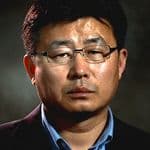
Interviews with Ahn Myeong Chul
North Korea · Interviewed August 4, 2014
Trafficking and Orphans
“China should accept North Koreans as refugees.”
Transcript
Another issue I’d like to raise involves female defectors. Many North Korean women go to China in search of food and they fall victim to human trafficking. Many orphans are born to these women; they have North Korean mothers and Chinese fathers.
I would say there about 100,000 of these orphans living in China. Unfortunately, the Chinese authorities will arrest and send the female defectors back to North Korea, regardless of whether their children are born out of marriage to Chinese fathers or whether they are born out of human trafficking.
These children are left without their mothers, because they are forced back to North Korea. Many of these children have now entered into their teenage years; some are in their 20’s.
Purely from a humanitarian basis and for the sake of these children, the Chinese government must adopt a policy where these women are not sent back to North Korea.
But if this kind of policy were to be implemented, I believe this could lead to a massive number of people leaving North Korea. If the population of the defectors rises to 100,000, I believe that this could lead to a natural collapse of North Korea as a nation. China should accept these Koreans as refugees and provide them refugee status.
About Ahn Myeong Chul
Ahn Myeong Chul was born in North Hamgyong Province in North Korea. As a teenager, he was the only person from his province selected to serve as a political prison camp guard. Ahn worked in several camps for a period of eight years where he was brainwashed into believing that political prisoners were enemies of the state unworthy of sympathy. As many as 130,000 men, women and children are imprisoned in North Korea’s vast system of gulags.
Although Ahn witnessed executions, starving children, and extreme torture, it was not until he became a prison truck driver that he questioned the system. Ahn would converse with prisoners he transported and was astonished to learn they knew nothing about the reasons for their imprisonment. It was his introduction to the country’s system of “guilt-by-association” punishment; in North Korea, whole families are incarcerated for the offenses of a single family member.
While on leave in 1994, Ahn learned that his father, a member of the ruling Workers’ Party, had committed suicide after questioning the regime’s rationing system. Ahn’s mother and siblings were imprisoned for his father’s offenses. Fearing that authorities would come for him, he fled to China and eventually reached safety in South Korea.
Since his escape, Ahn has become a North Korean human rights activist. He has provided testimony at the United Nations Commission of Inquiry on Human Rights in the Democratic People’s Republic of Korea (North Korea) and is now the secretary general of the organization Free NK Gulag.