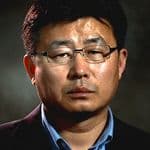
Interviews with Ahn Myeong Chul
North Korea · Interviewed August 4, 2014
How Many People Are in the Gulags?
“When I became a guard, there were 300,000 prisoners.”
Transcript
There has been some change in the number of camps since I left [in 1994]. Back when I joined the prison camps as a guard [in 1987], there were 12 political prison camps with a total of 300,000 prisoners.
I understand that in the late 1980s to the early 1990s, for several reasons, there was some restructuring. So to my knowledge, today there are a total of six prison camps with 150,000 prisoners.
[Estimates of the current total number of political prisoners in North Korea range from 80,000 to 200,000.]
As for the area of each political prison camp, the largest one that I worked in is about one-third as large as Seoul.
[The city of Seoul has an area of 605 square kilometers or 239 square miles. The Hoeryong Camp (Camp 22), one of the prisons where Ahn Myeong Chul worked, has an area of 225 square kilometers, or 87 square miles. The largest camp, Hwasong (Camp 16) has an area of 549 square kilometers or 212 square miles.]
I had a chance to visit four other prison camps and the size can vary according to the area and the amount of people.
About Ahn Myeong Chul
Ahn Myeong Chul was born in North Hamgyong Province in North Korea. As a teenager, he was the only person from his province selected to serve as a political prison camp guard. Ahn worked in several camps for a period of eight years where he was brainwashed into believing that political prisoners were enemies of the state unworthy of sympathy. As many as 130,000 men, women and children are imprisoned in North Korea’s vast system of gulags.
Although Ahn witnessed executions, starving children, and extreme torture, it was not until he became a prison truck driver that he questioned the system. Ahn would converse with prisoners he transported and was astonished to learn they knew nothing about the reasons for their imprisonment. It was his introduction to the country’s system of “guilt-by-association” punishment; in North Korea, whole families are incarcerated for the offenses of a single family member.
While on leave in 1994, Ahn learned that his father, a member of the ruling Workers’ Party, had committed suicide after questioning the regime’s rationing system. Ahn’s mother and siblings were imprisoned for his father’s offenses. Fearing that authorities would come for him, he fled to China and eventually reached safety in South Korea.
Since his escape, Ahn has become a North Korean human rights activist. He has provided testimony at the United Nations Commission of Inquiry on Human Rights in the Democratic People’s Republic of Korea (North Korea) and is now the secretary general of the organization Free NK Gulag.