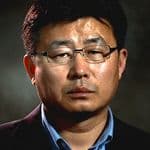
Interviews with Ahn Myeong Chul
North Korea · Interviewed August 4, 2014
Gulag Landscapes
Ahn Myeong Chul describes conditions in the gulags.
Transcript
Political prison camps are built in mountainous areas. The peaks of the mountains are blasted off and a barbed wire fence is erected around the area. Prisoners are given living quarters according to their labor assignment.
[Prisoners] either work on farms, in coal mines, or in factories. One house is assigned to five families of farm laborers. If you are working in the factory or coal mines, then collective housing is provided, like a dormitory.
Two thousand guards monitor each prison camp, with an additional 1,000 people as [administrative] staff, so a prison camp that has 50,000 prisoners has somewhere between 2,500 to 3,000 staff monitoring it.
The thing about prison camps is that – if satellite photos are taken of these places, they are camouflaged to look like an ordinary North Korean village. So unless someone from the prison camp itself tells you their own story, you can’t really tell from the photos whether it is a prison or not.
Of course, there is barbed wire around the area, but you cannot really tell that it is not a village.
Political prison camps or districts are much larger than one would think. There are two separate compounds: one for the families of security guards and another for the families of the prisoners.
They have separate schools – I would say around 10 schools – and hospitals as well. The camp also has a train station and a mining area so it is very large.
In terms of of food, clothing, and heating… First, in regards to food, if you are a miner or factory worker, you receive food in a canteen.
If you have not completed your work properly, then the amount of food in your bowl will be reduced. If you’re working on a farm, then you receive food based on a monthly ration. These people have to cook for themselves in their home. Once again if you have not completed your monthly duties, then the next month’s ration will be reduced.
[Those in the camps] mainly consume corn, potatoes, and vegetables. These are mixed together, and cooked into a type of porridge. You are also given salted radishes and cabbage. This is all the food you are given.
With regards to clothing, once every two years uniforms are distributed to factory and mining workers. Farmers receive used clothing that soldiers used to wear.
They are all dyed black. Male farmers are required to wear a hat all times. Female farmers are required to wear a white scarf or handkerchief around their head.
With regards to heating, factory and mining workers use the coal from the coal mines. Farm workers pull out roots and grass from the fields; dry and burn them for heating.
About Ahn Myeong Chul
Ahn Myeong Chul was born in North Hamgyong Province in North Korea. As a teenager, he was the only person from his province selected to serve as a political prison camp guard. Ahn worked in several camps for a period of eight years where he was brainwashed into believing that political prisoners were enemies of the state unworthy of sympathy. As many as 130,000 men, women and children are imprisoned in North Korea’s vast system of gulags.
Although Ahn witnessed executions, starving children, and extreme torture, it was not until he became a prison truck driver that he questioned the system. Ahn would converse with prisoners he transported and was astonished to learn they knew nothing about the reasons for their imprisonment. It was his introduction to the country’s system of “guilt-by-association” punishment; in North Korea, whole families are incarcerated for the offenses of a single family member.
While on leave in 1994, Ahn learned that his father, a member of the ruling Workers’ Party, had committed suicide after questioning the regime’s rationing system. Ahn’s mother and siblings were imprisoned for his father’s offenses. Fearing that authorities would come for him, he fled to China and eventually reached safety in South Korea.
Since his escape, Ahn has become a North Korean human rights activist. He has provided testimony at the United Nations Commission of Inquiry on Human Rights in the Democratic People’s Republic of Korea (North Korea) and is now the secretary general of the organization Free NK Gulag.