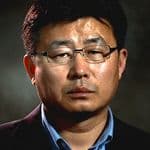
Interviews with Ahn Myeong Chul
North Korea · Interviewed August 4, 2014
The Commission of Inquiry
“We are trying to pressure North Korea through the United Nations.”
Transcript
We [at Free North Korea Gulag] played a key role in the establishment of the United Nations Commission of Inquiry. We also submitted petitions to the UN
[The Commission of Inquiry (COI) on Human Rights in the Democratic People’s Republic of Korea was established by the United Nations Human Rights Council in 2013 to investigate human rights violations in North Korea. Chaired by Australian Judge Michael Kirby, the COI presented an authoritative report in 2014 that documented crimes against humanity and massive abuses of human rights in North Korea.]
Last year [2013], when investigators of the UN COI came [to Seoul] for their hearings, 80 percent of the work was done by our members.
We are trying to make known the human rights situation in North Korea and pressure North Korea through the United Nations.
Here in South Korea, we are trying to make known the harsh realities and human rights violations of North Korean political prison camps to South Korean students and the general public.
The UN COI has completed its activities, and the report was released in February 2014. In March, the results were reported to the UN Human Rights Council as well. I heard about what countries were for and against North Korea.
We have provided a lot of support towards the creation of the COI Our ultimate goal is to bring the Kim family and the perpetrators of the North Korean regime to the International Criminal Court [ICC] but it is not easy.
[Three generations of the Kim family have ruled North Korea since 1948. Kim Il Sung (1912 – 1994) was the founder and leader of the North Korean state from 1948 until his death in 1994. Kim Jong Il (1941 – 2011) succeeded his father and led North Korea from 1994 until his death in 2011. Kim Jong Un (1983 – ) assumed power on his father’s death in 2011.]
The decision [to have the ICC take further action] has to pass the United Nations Security Council and Russia, China and Cuba oppose such a decision. It has yet to happen.
We are now requesting that the next step is for the United Nations to take action on North Korea. The COI report tells us about the oppression and suppression happening by the North Korean regime, now in the third generation of power.
If these people go unpunished, it flies in the face of a just society.
North Koreans would be very shocked to find out that their leaders are international criminals, but it is the right thing to do. We have to make them understand that perpetrators will eventually be punished.
If [the world] acts, then North Korean leaders will no longer be able to carry out such cruel actions against their people.
Even if an International Criminal Court ruling does not happen, I’m hoping that the United Nations can take action on North Korea to deal with this matter.
About Ahn Myeong Chul
Ahn Myeong Chul was born in North Hamgyong Province in North Korea. As a teenager, he was the only person from his province selected to serve as a political prison camp guard. Ahn worked in several camps for a period of eight years where he was brainwashed into believing that political prisoners were enemies of the state unworthy of sympathy. As many as 130,000 men, women and children are imprisoned in North Korea’s vast system of gulags.
Although Ahn witnessed executions, starving children, and extreme torture, it was not until he became a prison truck driver that he questioned the system. Ahn would converse with prisoners he transported and was astonished to learn they knew nothing about the reasons for their imprisonment. It was his introduction to the country’s system of “guilt-by-association” punishment; in North Korea, whole families are incarcerated for the offenses of a single family member.
While on leave in 1994, Ahn learned that his father, a member of the ruling Workers’ Party, had committed suicide after questioning the regime’s rationing system. Ahn’s mother and siblings were imprisoned for his father’s offenses. Fearing that authorities would come for him, he fled to China and eventually reached safety in South Korea.
Since his escape, Ahn has become a North Korean human rights activist. He has provided testimony at the United Nations Commission of Inquiry on Human Rights in the Democratic People’s Republic of Korea (North Korea) and is now the secretary general of the organization Free NK Gulag.