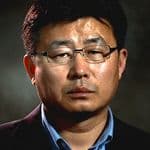
Interviews with Ahn Myeong Chul
North Korea · Interviewed August 4, 2014
Becoming an NGO Activist
“Not only was I a guard, but I was also a victim of the prison camps.”
Transcript
Why did I decide to start a nongovernmental organization that works on human rights issues in North Korea? Before I came to South Korea, nobody really knew about the hidden North Korean political prison camps.
It wasn’t until after I arrived and made the information known that the U.S. government and digital blogs started to use satellite photography. Photos of the prison camp areas in North Korea were taken.
I decided to become an activist, because my situation was unique. Not only was I a prison guard, but I was also a victim, in that my family was sent to a prison camp.
Based on my experiences and knowledge of political prison camps, I’ve testified in many places, including a U.S. Senate hearing. I was the first North Korean to testify there. I also shared my testimony in the United Kingdom.
Based on these experiences, in 2003 I decided to start an NGO for the purpose of ending political prison camps in North Korea.
We are a part of an international NGO network called the International Coalition to Stop Crimes against Humanity in North Korea – ICNK. ICNK was formed to improve the human rights situation in North Korea. My organization, Free North Korea Gulag, is at the center of this network.
Our partners also include Human Rights Watch and Amnesty International and come from many countries including the United States and Canada.
Our ultimate goal is to combine our strengths as human rights groups to improve the human rights situation in North Korea through the United Nations.
Every time I network with them, I’m constantly inspired. They provide new ideas and methods for approaching the problem, so I’m helped a great deal by this international network.
I think there is much work to be done for the sake of human rights in North Korea.
About Ahn Myeong Chul
Ahn Myeong Chul was born in North Hamgyong Province in North Korea. As a teenager, he was the only person from his province selected to serve as a political prison camp guard. Ahn worked in several camps for a period of eight years where he was brainwashed into believing that political prisoners were enemies of the state unworthy of sympathy. As many as 130,000 men, women and children are imprisoned in North Korea’s vast system of gulags.
Although Ahn witnessed executions, starving children, and extreme torture, it was not until he became a prison truck driver that he questioned the system. Ahn would converse with prisoners he transported and was astonished to learn they knew nothing about the reasons for their imprisonment. It was his introduction to the country’s system of “guilt-by-association” punishment; in North Korea, whole families are incarcerated for the offenses of a single family member.
While on leave in 1994, Ahn learned that his father, a member of the ruling Workers’ Party, had committed suicide after questioning the regime’s rationing system. Ahn’s mother and siblings were imprisoned for his father’s offenses. Fearing that authorities would come for him, he fled to China and eventually reached safety in South Korea.
Since his escape, Ahn has become a North Korean human rights activist. He has provided testimony at the United Nations Commission of Inquiry on Human Rights in the Democratic People’s Republic of Korea (North Korea) and is now the secretary general of the organization Free NK Gulag.