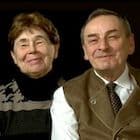
Interviews with Zbigniew and Zofia Romaszewski
Poland
John Paul II
The Romaszewskis reflect on the impact of Pope John Paul II’s visit to Poland in 1979.
Transcript
MR. ROMASZEWSKI: The role of [Pope] John Paul II [first Polish pope who led the Catholic Church 1978-2005] in those transformations was, in my opinion, absolutely essential. What I mean is, all the activities that we undertook in the social self-defense committee – KOR [The Workers’ Defense Committee, an anticommunist underground civil society organization in the 1970s, formed to provide assistance to laborers and others persecuted by the government], and which were large-scale. We published books, periodicals, newspapers brochures. So the entire scope of our activity, I believe that the overall number of people involved in this was maybe 2,000. The question here would be where to draw the line of sufficient activity for someone to be counted among the members of this movement. So this was crucial, because these people were the activists who would later be able to budge the nascent Solidarity [a labor union formed by Gdansk ship builders that transformed into a nationwide resistance movement]. But to think that we might have to do this without John Paul II, well ok, then we would have taken maybe 50 years doing it. Just to reach everyone, you know.
And what we have is the year 1979 [when John Paul II visits Poland] breaks out and brings this impulse; the people get out into the street and see that the numbers of police, of secret service, all those are such that you could swarm over them in one go. That millions are participating in these High Masses, [millions] of people who think the same way. So thus the people digested this experience, then a year went by, and then Solidarity was born.
Our – you know, the entire society was preparing to receive John Paul II. Our daughter was preparing some mattresses, so she was going to be sleeping out in the street just to keep her preferred spot. And throughout society people functioned this way. You know, being there, the paramount importance of being there, of participating.
About Zbigniew and Zofia Romaszewski
Zbigniew Romaszewski and his wife, Zofia Romaszewska, were born in 1940 in Warsaw, Poland. Growing up during World War II and the Soviet Union’s subjugation of Eastern Europe, the couple became opponents of Poland’s communist regime and activists in various democratic opposition movements.
As children, Zbigniew and Zofia witnessed the horrors of World War II. Zbigniew and his family were sent to concentration camps, where his father died. After the war, he was raised by his mother and aunt. Zofia’s parents were part of Poland’s Home Army, an underground resistance movement against the Nazi occupation.
Zbigniew and Zofia both studied physics at the University of Warsaw. In the 1970s, following protests over rising prices by workers in the cities of Radom and Ursus, they helped to create the Workers’ Defense Committee (KOR), an organization that provided monetary and material support to persecuted laborers and their families. In addition, KOR documented human rights violations committed by the regime. Zbigniew also served as a principal editor for the Madrid Report, a detailed account of human rights violations in Poland that was released during the 1980 review meeting of the Organization for Security and Cooperation in Europe (then known as the Conference on Security and Cooperation in Europe).
In 1980, worker strikes at Gdansk’s Lenin Shipyard led to the formation of Solidarity, the first independent labor union in the communist world. The movement inspired millions within Poland and transformed into a nationwide freedom movement. Zbigniew and Zofia joined Solidarity and became active members. In December 1981, the government declared martial law in an effort to crackdown on political opposition. During this time the Romaszewskis went into hiding and established Radio Solidarity, an underground radio station that broadcast independent news and information to Polish citizens until the communist regime fell.
In communism’s final days, Zbigniew was elected to the Senate as an independent candidate in the semi-free elections of 1989. The next year, Lech Walesa was elected as the country’s first post-communist president and the first fully free parliamentary elections were held in 1991. Zbigniew served in the Polish Senate through much of the following two decades, including as the deputy speaker from 2007 – 2011.
Zbigniew Romaszewski passed away on February 13, 2014.