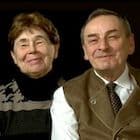
Interviews with Zbigniew and Zofia Romaszewski
Poland
Illusions of Prosperity
“Things were not as rosy as everyone had expected.”
Transcript
Well, [in the 1970’s] this was no longer Stalinism [referring to the totalitarian rule of Joseph Stalin, who led the Soviet Union from 1922-1952]. At any rate, there was a measure of freedom. Freedom started to function in society at large. Society started to organize a wee bit – for example, those who had particular interests, like we had, would organize seminars at their homes at which they met; where interesting people got invited to come and hold lectures – a sort of self-educational activity if you like, it became a common practice.
In material terms, well, what can you say? Edward Gierek [who led the Polish Communist Party from 1970 – 1980] took out large loans [from the West to fund the modernization of Polish industries] and so the quality of life was better practically for everyone. At our home, my wife did not work; I was employed at the Institute of Physics; however, we both had to make income on the side by tutoring. But, if every week perhaps twice or 3 times a week we gave these private lessons, then this allowed us to live at a sort of middle-class level, so that at the end of the 1970s we crossed over the boundary of making 10,000 zlotys per month [Polish currency], which was something we had dreamed about. Then we started thinking about buying ourselves a little Fiat 500, otherwise known as Maluch [the Weenie].
Perhaps I need to say what this looked like broadly speaking in society, this low-key material stability. You would have to begin maybe with 1970, with that great revolution which took place in the coastal cities, where two hundred-odd people lost their lives, and which ended the regime of Wladyslaw Gomulka. Now came Edward Gierek. [In December 1970, a series of protests erupted in northern Poland that were sparked by sudden price increases in food and other commodities. The uprisings were crushed by the regime. Wladyslaw Gomulka was a Communist Party member and the de facto leader of Poland from 1945 to 1948, and again from 1956 to 1970]
And this quasi-prosperity dates from that time. And in parallel, what also began was the country’s descent into debt. These things were linked. And as a result of these resources flowing from all that development and all those loans, [they] wound up being sufficient for all of 6 years – and later on of course loans have to be repaid. I think this was not just a Polish problem, but these days it is a world problem. The fact that they need to be repaid. So what transpired was that things were not as rosy as everyone had expected.
So at that juncture what started were the strikes – of course initially originated by price hikes [in 1976]. These price hikes caused a notable lowering of the people´s living standard. What I think was important for instance was in the city of Radom – and there you need to note one other thing – the living standard of Warsaw versus Radom are two very different things. The people in Radom were living way below Warsaw´s level – I never expected that I would find this kind of poverty in Poland.
So protest activities also began, incidentally, at this very time they [the government] came up with this “leading role of the Communist Party in the country” idea; and this was introduced into the country’s constitution – eternal friendship with the Soviet Union. [In 1976, the Communist Party added a highly controversial amendment to the constitution codifying the party’s role and institutionalizing the relationship with the USSR.]
So some large-scale protests, protest petitions were being circulated, people would sign them, and in any other way – we had hundreds and hundreds of these signatures by people who had already rebelled.
About Zbigniew and Zofia Romaszewski
Zbigniew Romaszewski and his wife, Zofia Romaszewska, were born in 1940 in Warsaw, Poland. Growing up during World War II and the Soviet Union’s subjugation of Eastern Europe, the couple became opponents of Poland’s communist regime and activists in various democratic opposition movements.
As children, Zbigniew and Zofia witnessed the horrors of World War II. Zbigniew and his family were sent to concentration camps, where his father died. After the war, he was raised by his mother and aunt. Zofia’s parents were part of Poland’s Home Army, an underground resistance movement against the Nazi occupation.
Zbigniew and Zofia both studied physics at the University of Warsaw. In the 1970s, following protests over rising prices by workers in the cities of Radom and Ursus, they helped to create the Workers’ Defense Committee (KOR), an organization that provided monetary and material support to persecuted laborers and their families. In addition, KOR documented human rights violations committed by the regime. Zbigniew also served as a principal editor for the Madrid Report, a detailed account of human rights violations in Poland that was released during the 1980 review meeting of the Organization for Security and Cooperation in Europe (then known as the Conference on Security and Cooperation in Europe).
In 1980, worker strikes at Gdansk’s Lenin Shipyard led to the formation of Solidarity, the first independent labor union in the communist world. The movement inspired millions within Poland and transformed into a nationwide freedom movement. Zbigniew and Zofia joined Solidarity and became active members. In December 1981, the government declared martial law in an effort to crackdown on political opposition. During this time the Romaszewskis went into hiding and established Radio Solidarity, an underground radio station that broadcast independent news and information to Polish citizens until the communist regime fell.
In communism’s final days, Zbigniew was elected to the Senate as an independent candidate in the semi-free elections of 1989. The next year, Lech Walesa was elected as the country’s first post-communist president and the first fully free parliamentary elections were held in 1991. Zbigniew served in the Polish Senate through much of the following two decades, including as the deputy speaker from 2007 – 2011.
Zbigniew Romaszewski passed away on February 13, 2014.