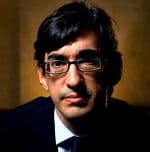
Interviews with Ernesto Hernandez Busto
Cuba · Interviewed January 5, 2011
Tactics of Repression
How the Cuban government represses dissidents.
Transcript
Repression has changed tactics and has been much more intense in recent years under the presidency of Raul Castro. What’s the new tactic? Small detentions lasting short periods of time. To prevent groups of dissidents from meeting or carrying out a community action, what they do is arrest many of them and prevent them from making it to a protest rally. These chains of short arrests that were used successfully with traditional dissidents, have reached the “bloggers” and new dissidents, if we can call them that. For some time, it appeared that people like Yoani Sanchez, Claudia Cadelo, or Reinaldo Escobar had a certain immunity because they were internationally recognized public figures, but in recent times, even they have been harassed, beaten, and even incarcerated. [Yoani Sanchez, Claudia Cadelo and Reinaldo Escobar are well-known Cuban bloggers. Sanchez and Escobar are married to each other.]
Yoani Sanchez, for example, has been incarcerated twice for hours and taken to a “dungeon.” There is recorded evidence and videos of beatings, done by professionals. But, undoubtedly, when these people have needed to act physically, they don’t think twice to do so, because they are not afraid of the repercussions. They know they will not be incarcerated for five or ten years or tried under false charges like the other dissidents in the past, because international pressure would be too much. But, I think they are not safe anymore because they now seem to be taking to the streets, and on the streets the strategy is different. The Cuban government will not allow an organized protest to serve as a “social spark.” They will never allow it. Now they worry about the Ladies in White Movement [The Ladies in White Movement, or Damas de Blanco, is a Cuban civil society group made up of female relatives of political prisoners] because they organize these repudiation meetings, they control violence very well but also have no scruples.
For example, if there is a famous blogger there, he or she will be beaten and insulted just like anyone else. There is a sort of constant personal harassment against them, from harassing your child at school to Internet campaigns against you. There is daily, continuous repression, and they also have the option of arrest, whenever they want to prevent certain people from being at the same meeting, they perform selective arrests, which in my opinion is the new tactic. They later let them go and it is always reported on the Internet, but it wears the opposition down.
On the other hand, the government is also wearing down because they don’t know what to do, with Yoani Sanchez for example. The person directly in charge of repressing the opposition has to be constantly calling his superior so they can contain this matter. If they kidnap you or put you in a car, they have to be careful not to beat you too much, leave marks, or be photographed, because this can be presented later as evidence.
I think this is what has the government in a situation never seen before — because how do they deal with the Ladies in White Movement or people who go on hunger strikes? You can’t. It’s out of their control. The hunger strikes that the Cuban government so strongly defended in the case of the IRA, the Irish Republican Army, have now backfired on them, because the same words Castro used in his speech to honor the victims of those hunger strikes are now being used against them. So you see, there are situations that the government can’t deal with.
About Ernesto Hernandez Busto
Ernesto Hernández Busto is an essayist, journalist and blogger and a recognized authority on technology and democracy. He was born in Havana, Cuba in 1968.
As a young man, he became active in the Paideia movement, a group of artists and writers that sought to reform cultural policy in Cuba. The response of security forces to this group of young intellectuals influenced his decision to emigrate. At the age of 21, he left Cuba “to escape the oppressive atmosphere of a totalitarian society, which was suffocating in all areas of life.”
From 1992 to 1999, he lived in Mexico, where we wrote for Vuelta magazine, edited by Octavio Paz, as well as other literary journals and publications. Since 1999, he has lived in Barcelona, Spain, where he works as an editor, translator and journalist.
His books include ‘Perfiles derechos. Fisonomías del escritor reaccionario’ (Barcelona, 2004; III “Casa de América” essay prize) and ‘Inventario de saldos. Apuntes sobre literatura cubana’ (Madrid, 2005). He has also published literary translations from Italian, Russian, French and Portuguese.
Since 2006, he has edited and published Penúltimos Días (www.penultimosdias.com), one of the most important websites on Cuban issues, with more than 70 contributors in 12 countries and over 10 million page views. He has participated in various forums on digital activism as “Internet at Liberty 2010” (organized by Google and the European Central University) and “Personal Democracy Forum Latin America,” among others. His blog is widely recognized as among the most authoritative and comprehensive websites covering events in Cuba.
He wrote the chapters on Cuba’s for Freedom House’s “Freedom on the Net” report (2010 and 2011). He is a frequent contributor to the Spanish newspaper El País, on policy and technology.
Read his blog at www.penultimosdias.com and follow him on Twitter: @penultimosdias