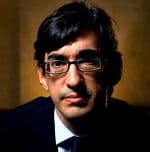
Interviews with Ernesto Hernandez Busto
Cuba · Interviewed January 5, 2011
Cuba and the Green Revolution
Cubans carefully followed Iran’s Green Revolution.
Transcript
Cubans followed carefully what happened with the “Green Revolution” in Iran. [The Green Revolution was a series of anti-government protests that developed after the 2009 Iranian elections that prompted a harsh government crackdown.] It was really interesting to see how young people and all these Cuban bloggers, including Yoani Sanchez, paid so much attention to this phenomenon. [Yoani Sanchez is a Cuban journalist and blogger. She is well known for her critical reporting of the regime and conditions in the country.] Why? Because the type of protests that occurred in Iran are very similar to the ones that are expected to take place in Cuba in the future.
What happened in Iran has really become emblematic because Cuba gave no news of these street protests. Four days later, Cuba printed a small article where they blamed imperialism and the CIA, but the way the Cuban government covered up what happened in Iran was a clear example of censorship. However, thanks to bloggers like Yoani Sanchez and abroad, Cubans found out about what really happened in Iran. The problem is that all these phenomena, having in common the use of technology, take place in different contexts. What happened in Iran is different to what happened in China or in Belarus or Burma with the monks. These protests have a high level of specificity, because they deal with specific local conditions that do not repeat elsewhere, but they are aware of all of this.
Cuban society is very closed, and certain technological events have marked tendencies and become trendy. This is important to keep in mind in political marketing. People like Yoani Sanchez are “trendy” because they have impact abroad and are very successful. They are an example of people that do things regardless of the government but have done well and become internationally famous for it. This side is what we must take advantage of. Cuban society really values this type of phenomena.
About Ernesto Hernandez Busto
Ernesto Hernández Busto is an essayist, journalist and blogger and a recognized authority on technology and democracy. He was born in Havana, Cuba in 1968.
As a young man, he became active in the Paideia movement, a group of artists and writers that sought to reform cultural policy in Cuba. The response of security forces to this group of young intellectuals influenced his decision to emigrate. At the age of 21, he left Cuba “to escape the oppressive atmosphere of a totalitarian society, which was suffocating in all areas of life.”
From 1992 to 1999, he lived in Mexico, where we wrote for Vuelta magazine, edited by Octavio Paz, as well as other literary journals and publications. Since 1999, he has lived in Barcelona, Spain, where he works as an editor, translator and journalist.
His books include ‘Perfiles derechos. Fisonomías del escritor reaccionario’ (Barcelona, 2004; III “Casa de América” essay prize) and ‘Inventario de saldos. Apuntes sobre literatura cubana’ (Madrid, 2005). He has also published literary translations from Italian, Russian, French and Portuguese.
Since 2006, he has edited and published Penúltimos Días (www.penultimosdias.com), one of the most important websites on Cuban issues, with more than 70 contributors in 12 countries and over 10 million page views. He has participated in various forums on digital activism as “Internet at Liberty 2010” (organized by Google and the European Central University) and “Personal Democracy Forum Latin America,” among others. His blog is widely recognized as among the most authoritative and comprehensive websites covering events in Cuba.
He wrote the chapters on Cuba’s for Freedom House’s “Freedom on the Net” report (2010 and 2011). He is a frequent contributor to the Spanish newspaper El País, on policy and technology.
Read his blog at www.penultimosdias.com and follow him on Twitter: @penultimosdias