Interviews with Ernesto Hernandez Busto
Cuba · Interviewed January 5, 2011
The Role of the United Nations
How Cuba uses the United Nations to promote its positions.
Transcript
My position regarding the presence of the UN and other organizations linked to the UN is very negative. The idea of cooperation these organizations have is always directly through the Cuban government. The Cuban government accomplished with the UN what it wanted, a place within the Human Rights Council that has helped them as an instrument of change, not only to ban any resolution against Cuba but also to block resolutions that go against friendly countries like Iran and China.
The presence of Cuba in that committee is really a stigma to any human rights defender in Cuba and anywhere in the world. No one can figure out how the UN has allowed it that fundamental role that is used by Cuba as a political weapon. Not only by Cuba but by other countries. They exchange help by blocking resolutions that might affect any of them. From that perspective, the UN is a fiasco. They have never been concerned for the human rights violations in Cuba, they haven’t even wanted to register or receive information from serious organizations that have tried to discuss these violations.
About Ernesto Hernandez Busto
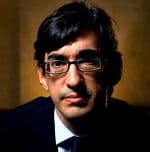
Ernesto Hernández Busto is an essayist, journalist and blogger and a recognized authority on technology and democracy. He was born in Havana, Cuba in 1968.
As a young man, he became active in the Paideia movement, a group of artists and writers that sought to reform cultural policy in Cuba. The response of security forces to this group of young intellectuals influenced his decision to emigrate. At the age of 21, he left Cuba “to escape the oppressive atmosphere of a totalitarian society, which was suffocating in all areas of life.”
From 1992 to 1999, he lived in Mexico, where we wrote for Vuelta magazine, edited by Octavio Paz, as well as other literary journals and publications. Since 1999, he has lived in Barcelona, Spain, where he works as an editor, translator and journalist.
His books include ‘Perfiles derechos. Fisonomías del escritor reaccionario’ (Barcelona, 2004; III “Casa de América” essay prize) and ‘Inventario de saldos. Apuntes sobre literatura cubana’ (Madrid, 2005). He has also published literary translations from Italian, Russian, French and Portuguese.
Since 2006, he has edited and published Penúltimos Días (www.penultimosdias.com), one of the most important websites on Cuban issues, with more than 70 contributors in 12 countries and over 10 million page views. He has participated in various forums on digital activism as “Internet at Liberty 2010” (organized by Google and the European Central University) and “Personal Democracy Forum Latin America,” among others. His blog is widely recognized as among the most authoritative and comprehensive websites covering events in Cuba.
He wrote the chapters on Cuba’s for Freedom House’s “Freedom on the Net” report (2010 and 2011). He is a frequent contributor to the Spanish newspaper El País, on policy and technology.
Read his blog at www.penultimosdias.com and follow him on Twitter: @penultimosdias