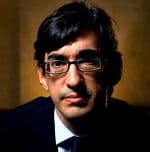
Interviews with Ernesto Hernandez Busto
Cuba · Interviewed January 5, 2011
Technology Unites the Opposition
How technology is uniting a fractured opposition.
Transcript
I think that the relationship or link between the “new kind” of dissident movements, if you can call them that, youth protest movements, and the traditional opposition, is occurring, but spontaneously. One of the fundamental tasks of the Cuban government and of the intelligence services of state security has been to keep the opposition fragmented, and they are very concerned that this may create a synergy between youth groups, such as the one that just one week ago organized a protest march on a very busy street, and dissident factions. Many of these groups have no clear political ideology, as the traditional dissident movements do, but if a public scenario is created on the street, in which that synergy becomes possible, the Cuban government would have serious reasons to be worried, and I think that´s what worries them.
It’s not just that Yoani Sanchez [Yoani Sanchez is a Cuban journalist and blogger. She is well known for her critical reporting of the regime and conditions in the country] and other bloggers have physically accompanied the Ladies in White Movement [The Ladies in White Movement, or Damas de Blanco, is a Cuban civil society group made up of female relatives of political prisoners], in these protests that took place a week ago in memory of the Black Spring of 2003. [The Black Spring was a government crackdown on activists and dissidents.]
In addition to being there, physically, and the relationship that has been built between these groups, a cordial relationship, and a constant communication through Twitter and other media that the traditional dissident did not have before. Besides that, the Ladies in White are acting as the “fence sitters” of other protests in other places, because they make protests that are not pre-announced, except for a small group, they invite the press to witness, they go around the city in an unplanned way, and I think that forces a security operation, a display that can be very costly, not only in terms of logistics, but in terms of image. What most worries the Cuban regime is that these protests take place in the street and make the dissident movement visible.
As long as they are gathered in a house, or doing something once in a while in a church, they can control them, but when they go to a very central street in Havana, other people suddenly realize: hey, there are dissidents here. Who are these women who are dressed in white? Why are they surrounding them? And increasingly they have realized that to organize these crowds, these acts of repudiation, people are not willing to hit these women, as they were at some time in the 80´s.
It´s a bit more complicated, that would create them serious problems, because, well, they are women, there is a whole symbolism in this white thing, there is a good reason — that they are defending their families who are prisoners. They do care a lot, and I think here is where the key link between bloggers and young people who are able to understand the political causes of these people, but at the same time they are not quite a political party because they are a protest movement.
About Ernesto Hernandez Busto
Ernesto Hernández Busto is an essayist, journalist and blogger and a recognized authority on technology and democracy. He was born in Havana, Cuba in 1968.
As a young man, he became active in the Paideia movement, a group of artists and writers that sought to reform cultural policy in Cuba. The response of security forces to this group of young intellectuals influenced his decision to emigrate. At the age of 21, he left Cuba “to escape the oppressive atmosphere of a totalitarian society, which was suffocating in all areas of life.”
From 1992 to 1999, he lived in Mexico, where we wrote for Vuelta magazine, edited by Octavio Paz, as well as other literary journals and publications. Since 1999, he has lived in Barcelona, Spain, where he works as an editor, translator and journalist.
His books include ‘Perfiles derechos. Fisonomías del escritor reaccionario’ (Barcelona, 2004; III “Casa de América” essay prize) and ‘Inventario de saldos. Apuntes sobre literatura cubana’ (Madrid, 2005). He has also published literary translations from Italian, Russian, French and Portuguese.
Since 2006, he has edited and published Penúltimos Días (www.penultimosdias.com), one of the most important websites on Cuban issues, with more than 70 contributors in 12 countries and over 10 million page views. He has participated in various forums on digital activism as “Internet at Liberty 2010” (organized by Google and the European Central University) and “Personal Democracy Forum Latin America,” among others. His blog is widely recognized as among the most authoritative and comprehensive websites covering events in Cuba.
He wrote the chapters on Cuba’s for Freedom House’s “Freedom on the Net” report (2010 and 2011). He is a frequent contributor to the Spanish newspaper El País, on policy and technology.
Read his blog at www.penultimosdias.com and follow him on Twitter: @penultimosdias