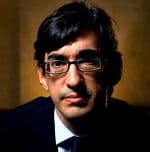
Interviews with Ernesto Hernandez Busto
Cuba · Interviewed January 5, 2011
The Regime and the Internet
“The biggest mistake of the Cuban government was not taking the Internet seriously.”
Transcript
I think the biggest mistake of the Cuban government concerning these new dissident movements was not taking the Internet seriously. They are late in the game in this area. Certainly the importance that this movement has gained the visibility of Yoani Sanchez [Yoani Sanchez is a Cuban journalist and blogger. She is well known for her critical reporting of the regime and conditions in the country] as a figure, the pressure of the foreign media especially, and the prestige that this movement has acquired, have forced them to respond, but they have responded too late.
I mean, they believed that Internet, because of the access levels that were in Cuba, was a negligible percent and that it would be unable to create a chain reaction, that it would be limited to a chronicle of daily disillusion and for that, it was only necessary to block the blog, the Yoani Sanchez platform; and to keep an eye on these people. But the government´s tactics in relation to the Internet have proved to be quite loose, as opposed to governments that have taken it seriously and that have a very sophisticated repression structure, like China or Iran. In Cuba, the attempts to make a digital counteroffensive are belated and clumsy.
They have very little presence in search engines; they have very little presence in the world of information about Cuba that circulates on the web. Why? Because here time is important. If you do not react in time, there are people that already have their own information posted on these subjects and it is very difficult to compete. But they have made a major counteroffensive in social networks; they have modernized all government web sites, they have tried to create this alternative platform to insult and create all sorts of, say, lies and falsehoods about the bloggers´ financing. But in the end, the audience they have is very small; it´s a captive audience, because nobody that has 10 minutes of Internet is going to pay to go to the official blogging platform. So they always end up reading their own blogs, I mean, they are their own readers. They have no influence; they are not able to connect to the media because it´s not just about telling lies, and all they tell is lies.
They did not realize that in a USB flash drive you can move videos at a very fast speed and you can also disseminate information — that it is impossible, that there’s no sense in blocking a platform because people log in with proxies, or sneak into other blogs. I mean, it does not matter that the person cannot visit the Yoani Sanchez blog, because all her posts are automatically placed in mine, which is not blocked, and it takes a very complex ISP change to prevent blocking on Cuban servers.
I think the picture is starting to change, they are thinking of and designing a new way to control the Internet, when the underground cable comes that will connect Cuba with Venezuela, and that will provide enough bandwidth to make the Internet much more massive than it is now. Keep an eye on this. Because the Cuban government has warned that there will never be an Internet service for citizens, it will remain a controlled service. But when all workplaces, all institutions have access to more bandwidth, it will be impossible to control these passwords, and to not sell them on the black market, it will be impossible to control this the way it is controlled now.
About Ernesto Hernandez Busto
Ernesto Hernández Busto is an essayist, journalist and blogger and a recognized authority on technology and democracy. He was born in Havana, Cuba in 1968.
As a young man, he became active in the Paideia movement, a group of artists and writers that sought to reform cultural policy in Cuba. The response of security forces to this group of young intellectuals influenced his decision to emigrate. At the age of 21, he left Cuba “to escape the oppressive atmosphere of a totalitarian society, which was suffocating in all areas of life.”
From 1992 to 1999, he lived in Mexico, where we wrote for Vuelta magazine, edited by Octavio Paz, as well as other literary journals and publications. Since 1999, he has lived in Barcelona, Spain, where he works as an editor, translator and journalist.
His books include ‘Perfiles derechos. Fisonomías del escritor reaccionario’ (Barcelona, 2004; III “Casa de América” essay prize) and ‘Inventario de saldos. Apuntes sobre literatura cubana’ (Madrid, 2005). He has also published literary translations from Italian, Russian, French and Portuguese.
Since 2006, he has edited and published Penúltimos Días (www.penultimosdias.com), one of the most important websites on Cuban issues, with more than 70 contributors in 12 countries and over 10 million page views. He has participated in various forums on digital activism as “Internet at Liberty 2010” (organized by Google and the European Central University) and “Personal Democracy Forum Latin America,” among others. His blog is widely recognized as among the most authoritative and comprehensive websites covering events in Cuba.
He wrote the chapters on Cuba’s for Freedom House’s “Freedom on the Net” report (2010 and 2011). He is a frequent contributor to the Spanish newspaper El País, on policy and technology.
Read his blog at www.penultimosdias.com and follow him on Twitter: @penultimosdias