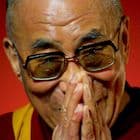
Interviews with Dalai Lama
China
Tibet Within China
On the reasons Tibetans are no longer seeking independence from China.
Transcript
Actually, why we are not seeking independence or separate? Because the world is changing. I always look with admiration the spirit of European Union. People, you see, thinking the common interest is more important than the national interest alone.
So in Tibet, with Asia also. One time, one great Indian spiritual leader, Azaras Tinga. And he wanted to express some kind of federal sort of union. That means: A) Afghanistan, B) Burma, C) Sri Lanka, and then India and Pakistan. All some kind of a united, federal, some kind of country.
So Tibetans also want richness, and therefore they, in order to material development, we remain within the People’s Republic of China. We get greater benefit, like railway – construction of railway link. These are the indication the further development, provided used properly. Now, so far, they use mainly military purpose, like that.
So, and anyway, so that’s one way. That also is our own interest and the People’s Republic of China as a whole: Tibet not separate, remain within the People’s Republic of China. And that’s the Chinese top-most concern. Then, we Tibetan side, 1950 – 1951 – 1950, the Tibet, when we talk Tibet, entire Tibetan area, the population around six million. But then, China’s officials and usually the outside world also, you see, when they refer Tibet, it’s the central part of Tibet, which under jurisdiction of Dalai Lama’s government.
So 1949, there’s some other part of Tibet already so-called liberated. But then the Tibet territory, which under Dalai Lama’s government jurisdiction, when China in 1950, China’s Army already enter there. But then, at some state – up to certain area – all, I think, at that time, about 8,000 Tibetan soldier already eliminated. Now, China is, militarily-speaking, very easy to go up to Lhasa. But the wise Chinese leader at that time, he said stop.
Then, they prefer Tibetan liberation should be peaceful liberation. So agreement, 17-Point Agreement signed. So the Chinese government always say Tibet case liberated by peaceful means with agreement. So we have a certain right, you see, to a certain sort of authority like that.
So and then, also, the Chinese constitution mentioned these certain rights, preservation of their culture and so on and so on. So therefore, if the constitution – the certain rights, which is mentioned in the constitution and also some official document – if these implement fully, sincerely in Tibet, then that’s major benefit. We can preserve our own culture, our own spirituality. And then, also the development of Tibet according our own sort of environment.
Our Chinese military personnel much increased. And the security personnel also much increase. One side. So rule of fear, rule of terror there. And then, meantime, about, I think, more than 10 years ago, one Chinese Party Secretary of the Autonomous Region of Tibet, they say, people know he is a type of hardliner. So after he came, at one Party meeting, he actually mentioned, ultimate source of threat, Tibet being separate from Mainland China, is Tibetan Buddhist faith. So accordingly, since then, they’re stepping up control of education. And in education, like Lhasa University, the previous before that, they also in their curriculum also include some classical Tibetan texts. But all stop. Then stepping up in the monasteries or nunnery political education.
And also, you see, traditionally, these big monastery: the student come from different sort of part of Tibet, and not only that, even from China, from India, from Russia, from Mongolia. Open to everybody. Now, gradually the Chinese local authority, they expect all the student come from outside Autonomous Region of Tibet. So that also does reduce number and then the stepping up political education.
At that time, local Tibetan express now semi-Cultural Revolution returning. So his sort of hardliner policy, narrow-minded, short sighted sort of policy really causing 2008 crisis. Like that. Yes. Tibet at that time, even the other Tibetan area, in different Chinese provinces, comparatively better. Now, these area also more tightening.
But just, I received very recently, one – now for example, the last year, number of Tibetan school in these area outside the Autonomous Region, the new policy is now all subjects must be taught through Chinese language. And Tibetan language only just a language.
Then just a few days ago, I received one information: some school, the Chinese local police raided and search different books in the students’ home. And they, all the book, Tibetan text or Tibetan – some books – they all removed. And now on, they only can read and keep those book which officially issued. So really they’re tightening.
About Dalai Lama
His Holiness the 14th Dalai Lama, Tenzin Gyatso, is the spiritual leader of Tibetan Buddhism and, for a time, led the government of Tibet in exile.
His Holiness was born July 6, 1935, to a farming family in northeastern Tibet. He was identified as the reincarnation of the 13th Dalai Lama, Thubten Gyatso, when he was three years old and was raised in Lhasa, Tibet, where he was educated in topics such as Buddhist philosophy, logic, Tibetan art and culture, and medicine in preparation for his responsibilities as the Dalai Lama.
In 1949, at age 15, His Holiness assumed responsibility as the political leader of Tibet. Later that year, the People’s Republic of China invaded Tibet. In 1959, as Chinese troops suppressed a Tibetan uprising in Lhasa, His Holiness was forced into exile and has since lived in Dharamsala, India, the seat of the Tibetan political administration in exile.
His Holiness has worked to establish a democratic government in exile. The Charter of Tibetans in Exile grants freedom of speech, belief, and assembly. In 2001, His Holiness ceded his absolute power over the government to an elected parliament. He has recently ceded any role in the government because of his view that spiritual and political authorities should be divided.
In 1989 His Holiness was awarded the Nobel Peace Prize. In announcing the award, the Nobel Committee recognized that “the Dalai Lama . . . consistently has opposed the use of violence. He has instead advocated peaceful solutions based upon tolerance and mutual respect in order to preserve the historical and cultural heritage of his people.”