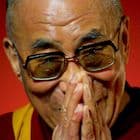
Interviews with Dalai Lama
China
Repression
On repression in Tibet.
Transcript
I think, this recall 1956, when I was in India. And some Gandhian freedom fighter, as he told me their experience of how to carry sort of disobedience and some kind of civil movement. Then I told him that British Imperialist quite bad, but still there is independent judiciary and also freedom of expression. Now the new ruler in Tibet, no independent judiciary and no freedom of expression.
Mahatma Gandhi from prison, he can write and appeal to court. But in the Communist authoritarian system, impossible. So and anyway, very difficult. So of course, the other sort of the way of, sort of, expression of opposition or resentment then they certainly they will do. But there’s no other choice except some demonstrations. Then as soon as demonstrations they happen, then they give the name, “troubling government.” So arrest and once they arrest, serious torture. Many people who arrested then, when they come out, either it’s a broken leg or hand, like that.
Overall, it’s about to constantly raise about human rights, about religious freedom. You see, these are — some embed in their mind. Some very, very helpful. Long run, very helpful. Externally, lot of government and including the United States, you see, raise the human right issues and these things. In the meantime, within the country, intellectuals really showing their resentment. They want more freedom. Freedom of speech like that. So the both sides, within the country and external.
And then, also, I think those people within the country who really carrying some change, some freedom, when outside world showing interest, showing concern about them, is immeasurable source of encouragement. It is very, very important. If, you see, while they carrying this movement, the outside world remains silent – that, I think, very bad. Morally, also wrong. So like United States and also European Union and some other countries, from time to time express their concern, it’s very helpful.
Well, usually, I think the United States, I think both Houses, and also this administration also. The last several decades, one of the source of inspiration, and as well as the European Union. I think that both Houses and also Union Parliament considered Tibet as an occupied land.
About Dalai Lama
His Holiness the 14th Dalai Lama, Tenzin Gyatso, is the spiritual leader of Tibetan Buddhism and, for a time, led the government of Tibet in exile.
His Holiness was born July 6, 1935, to a farming family in northeastern Tibet. He was identified as the reincarnation of the 13th Dalai Lama, Thubten Gyatso, when he was three years old and was raised in Lhasa, Tibet, where he was educated in topics such as Buddhist philosophy, logic, Tibetan art and culture, and medicine in preparation for his responsibilities as the Dalai Lama.
In 1949, at age 15, His Holiness assumed responsibility as the political leader of Tibet. Later that year, the People’s Republic of China invaded Tibet. In 1959, as Chinese troops suppressed a Tibetan uprising in Lhasa, His Holiness was forced into exile and has since lived in Dharamsala, India, the seat of the Tibetan political administration in exile.
His Holiness has worked to establish a democratic government in exile. The Charter of Tibetans in Exile grants freedom of speech, belief, and assembly. In 2001, His Holiness ceded his absolute power over the government to an elected parliament. He has recently ceded any role in the government because of his view that spiritual and political authorities should be divided.
In 1989 His Holiness was awarded the Nobel Peace Prize. In announcing the award, the Nobel Committee recognized that “the Dalai Lama . . . consistently has opposed the use of violence. He has instead advocated peaceful solutions based upon tolerance and mutual respect in order to preserve the historical and cultural heritage of his people.”