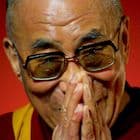
Interviews with Dalai Lama
China
Necessity of a Democratic World
The world belongs to nearly 7 billion human beings, not kings or religious leaders.
Transcript
I think firstly, the rule by kings or religious leader – that now already outdated. Even like British and Japan, the royals still remain, but just as symbolic. But otherwise, these are now just past history. Then these leaders, I think initially, maybe some with support of the people. Like most of these revolutions and movement, without people’s support, they will not [have] success. So the people’s support there, originally.
But then, once I think like it’s the Chinese Communists. And also, I think to some extent, I think they Lenin, Bolshevik sort of revolution. Initially, I think poorer section of the people really support. Then the political, as far as I’m concerned, I know better about the Chinese case. When the Civil War, you see, took place – at that time, and then, also the Long March. These Communists led by Chairman Mao were really dedicated people really. They really, you see, carrying these revolutions work because of the true injustice in old system.
So therefore, the early period of the revolution, like any other, I think very pure. And people’s support also there. Then, unfortunately, those individuals who are lacking moral principle, self-discipline – once they get power, then power corrupted themselves. Then, eventually – the original sort of idea is serving to people – then, eventually, due to power, they love to see controlled power, control people.
Therefore, they like the democratic system: terms four years, five years, and then new election. And see if people support. I think that’s best system. Best system. Otherwise, too much long – long period.
The weak people inside, I think, I mean, they’re spiritually weak. And sometimes, see, it’s quite sort of diversity in nature. Those people who lead certain movements, they have just such confidence and determination. But sometimes, eventually, self-confidence is over-self-confidence. Then, you see, they’re very sensitive about criticism towards them. So, that is reason, I think, the Egyptian president and also the other, I think, initially, I think people support them too long. Then corrupted. This is what I feel.
So actually, I think democratic idea, democratic system – universal value. I always was telling people, even the world level, world belongs to people. World belongs to nearly seven billion human being, not kings or religious leaders like that, or different parties. There, so they like in United States belongs to American people. Like China or Egypt, belongs to the people, not a few ruling families or individuals.
So therefore, then they in order to carry the responsibility about your own country, by the people, then the best system is through election, elected leadership. So democratic system is the best. So undemocratic, they used totalitarian. Maybe, some feel, maybe some say they more efficient or something like that. But overall picture, it’s not good.
So these are now, I think, within 20th century – early part of the 20th century, later part of 20th century – much change. Now, within the 21st century, now some of the ruler, which now essentially outdated. Now change these things, by the people. Not by external forces, by the people themselves.
About Dalai Lama
His Holiness the 14th Dalai Lama, Tenzin Gyatso, is the spiritual leader of Tibetan Buddhism and, for a time, led the government of Tibet in exile.
His Holiness was born July 6, 1935, to a farming family in northeastern Tibet. He was identified as the reincarnation of the 13th Dalai Lama, Thubten Gyatso, when he was three years old and was raised in Lhasa, Tibet, where he was educated in topics such as Buddhist philosophy, logic, Tibetan art and culture, and medicine in preparation for his responsibilities as the Dalai Lama.
In 1949, at age 15, His Holiness assumed responsibility as the political leader of Tibet. Later that year, the People’s Republic of China invaded Tibet. In 1959, as Chinese troops suppressed a Tibetan uprising in Lhasa, His Holiness was forced into exile and has since lived in Dharamsala, India, the seat of the Tibetan political administration in exile.
His Holiness has worked to establish a democratic government in exile. The Charter of Tibetans in Exile grants freedom of speech, belief, and assembly. In 2001, His Holiness ceded his absolute power over the government to an elected parliament. He has recently ceded any role in the government because of his view that spiritual and political authorities should be divided.
In 1989 His Holiness was awarded the Nobel Peace Prize. In announcing the award, the Nobel Committee recognized that “the Dalai Lama . . . consistently has opposed the use of violence. He has instead advocated peaceful solutions based upon tolerance and mutual respect in order to preserve the historical and cultural heritage of his people.”