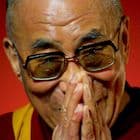
Interviews with Dalai Lama
China
Nonviolence
On the benefits of nonviolence.
Transcript
I think now we are 21st century. I think, and within the 20th century, I think all the people sort of struggled. So the freedom, I think, more wider compared early part of 20th century. So now we 21st century. I think similar. See, we have to carry struggle to few remaining area where no freedom.
I think people, I think, have to carry their spirit and their struggle. And I think possibly nonviolent way. Long run, that’s more effective. But sometimes it’s out of desperate, like Egypt or some other places, there’s some possible exception there. But now Libya, some exception there. But generally, I think should be, I think, nonviolent way. Like, I think, the way topple Philippine dictator [Ferdinand] Marcos or something. Peaceful, popular movement. And also Chile, I think.
So the popular sort of peaceful movement is now become, I would say, I think the reality. And I think comparatively South Africa also see peaceful ways, change, finally. So I think that I want to share. Please keep determination, will power, because we have the justice.
In my lifelong experience or observation, ultimately truth always remain stronger than for power of force or power of gun. Very clear. My own case is a – I always used to carry our struggle openly, transparently, truthful, honest. So it will always remain certain power.
The gun temporarily very powerful. Everybody loves one’s own life. So when gun shows, you see, out of fear, it’s a little discipline there. But that’s temporary method. I think world history shows that. So therefore, the struggle for freedom, democracy is really right, reasonable. And everybody have the right to be free.
About Dalai Lama
His Holiness the 14th Dalai Lama, Tenzin Gyatso, is the spiritual leader of Tibetan Buddhism and, for a time, led the government of Tibet in exile.
His Holiness was born July 6, 1935, to a farming family in northeastern Tibet. He was identified as the reincarnation of the 13th Dalai Lama, Thubten Gyatso, when he was three years old and was raised in Lhasa, Tibet, where he was educated in topics such as Buddhist philosophy, logic, Tibetan art and culture, and medicine in preparation for his responsibilities as the Dalai Lama.
In 1949, at age 15, His Holiness assumed responsibility as the political leader of Tibet. Later that year, the People’s Republic of China invaded Tibet. In 1959, as Chinese troops suppressed a Tibetan uprising in Lhasa, His Holiness was forced into exile and has since lived in Dharamsala, India, the seat of the Tibetan political administration in exile.
His Holiness has worked to establish a democratic government in exile. The Charter of Tibetans in Exile grants freedom of speech, belief, and assembly. In 2001, His Holiness ceded his absolute power over the government to an elected parliament. He has recently ceded any role in the government because of his view that spiritual and political authorities should be divided.
In 1989 His Holiness was awarded the Nobel Peace Prize. In announcing the award, the Nobel Committee recognized that “the Dalai Lama . . . consistently has opposed the use of violence. He has instead advocated peaceful solutions based upon tolerance and mutual respect in order to preserve the historical and cultural heritage of his people.”