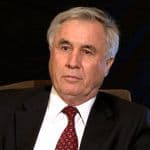
Interviews with Álvaro Varela Walker
Chile
What is Freedom?
“Freedom is the capacity to develop as a human being in all aspects.”
Transcript
Freedom is the capacity to develop as a human being in all aspects. To have the capacity to express oneself, of work, of life, of health and of not being punished for what one can do within the normal sphere of a civilized society.
[Freedom] is the capacity to be a person. We, in the Vicariate of Solidarity used this phrase a lot: to be a person. It means that each individual has the possibility of having a presence in society and not be limited on how to be a human being.
[The Vicariate of Solidarity, an agency of the Chilean Catholic Church, was a human rights organization in Chile during the military regime of Augusto Pinochet.]
About Álvaro Varela Walker
Álvaro Varela Walker is a Chilean attorney and human rights activist. He was born in 1951.
Varela studied law at the University of Chile. He became student body president and was active in politics. He supported Salvador Allende, a leftist who was elected president of Chile in 1970. In 1973, Allende’s government was overthrown by a military coup led by General Augusto Pinochet. As the universities in Chile came under control of Pinochet’s military regime, he was expelled.
In 1974, he began working as an attorney for the Committee for Cooperation for Peace, an ecumenical initiative of the Catholic Church to catalog and defend against human rights abuses committed by the dictatorship. In 1976, Pope Paul VI established the Vicariate of Solidarity (La Vicaría de la Solidaridad) under the leadership of the Archdiocese of Santiago, where Varela continued his human rights work. In addition to publicly denouncing the human rights abuses of the regime, the Vicariate provided legal assistance to 250,000 Chileans and became a target of the military government.
After the restoration of democracy in 1989, Varela served as a member of the Valech Commission (the National Commission on Political Imprisonment and Torture Report) chaired by Catholic Bishop Sergio Valech, which investigated the human rights record of the Pinochet regime. The Commission found that there were more than 38,000 people detained by the regime. The Valech Commission built on the work of an earlier Rettig Report, which had determined that more than 2,200 people were executed by the Pinochet regime. The Valech Commission provided an accounting of the abuses of the military regime, as well as determining reparations to its victims.