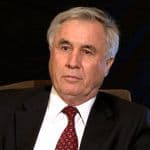
Interviews with Álvaro Varela Walker
Chile
Kidnapping and Torture
“They were kidnappings; they were not arrests because there was no legality, no formality.”
Transcript
In November of 1974, I was kidnapped by a unit of the DINA [National Intelligence Directorate], commanded by Osvaldo Romo Mena, who is responsible for at least 250 missing detainees in Chile. He was a torturer. He was even singled out (it was a singular case in human rights history) and named in one of the resolutions of the General Assembly of the United Nations as a torturer.
[The Dirección de Inteligencia Nacional (English: National Intelligence Directorate) or DINA was the Chilean secret police in the government of Augusto Pinochet.] [Osvaldo Romo (1938 – 2007) was an agent of the Chilean Dirección de Inteligencia Nacional (DINA) from 1973 to 1990, during the rule of Augusto Pinochet. He was tried and convicted of kidnapping by a Chilean court.]
As part of a huge battalion made up of members of the DINA, he kidnapped me in November of 1974 from the home of my parents, where I lived. I had begun criminal charges against him because I had identified him as a participant in a series of kidnappings. They were kidnappings; they were not arrests because there was no legality, no formality.
During one of those kidnappings he had raped someone. So I had initiated criminal charges against Osvaldo Romo Mena for that rape.
Shortly after he kidnapped me, he drove me to one of the DINA’S torture centers, located in a residential sector of Santiago, where I was [held] for approximately forty hours. The purpose of the kidnapping was to mount a plan, using me against Cardinal Raúl Silva Henríquez, the head of the Chilean Catholic Church.
[Raúl Silva Henríquez, (1907 –1999) was a Chilean Cardinal of the Catholic Church.]
During those forty hours the mistreatment and torture was constant. I was prepared to be executed by a firing squad. For several hours a gun barrel was pointed at my forehead, next to my forehead, etc.
I was in the torture chamber. I was severely beaten and tortured. At some point, the plan that had been designed against Cardinal Silva Henríquez for which they had kidnapped me was changed or was dropped and I was released.
The dictatorship never acknowledged that I had been detained. I was the first of those of us who were in the human rights legal defense team to be kidnapped and tortured. The Catholic Church’s response was very strong and powerful, achieving its goal of freeing me.
About Álvaro Varela Walker
Álvaro Varela Walker is a Chilean attorney and human rights activist. He was born in 1951.
Varela studied law at the University of Chile. He became student body president and was active in politics. He supported Salvador Allende, a leftist who was elected president of Chile in 1970. In 1973, Allende’s government was overthrown by a military coup led by General Augusto Pinochet. As the universities in Chile came under control of Pinochet’s military regime, he was expelled.
In 1974, he began working as an attorney for the Committee for Cooperation for Peace, an ecumenical initiative of the Catholic Church to catalog and defend against human rights abuses committed by the dictatorship. In 1976, Pope Paul VI established the Vicariate of Solidarity (La Vicaría de la Solidaridad) under the leadership of the Archdiocese of Santiago, where Varela continued his human rights work. In addition to publicly denouncing the human rights abuses of the regime, the Vicariate provided legal assistance to 250,000 Chileans and became a target of the military government.
After the restoration of democracy in 1989, Varela served as a member of the Valech Commission (the National Commission on Political Imprisonment and Torture Report) chaired by Catholic Bishop Sergio Valech, which investigated the human rights record of the Pinochet regime. The Commission found that there were more than 38,000 people detained by the regime. The Valech Commission built on the work of an earlier Rettig Report, which had determined that more than 2,200 people were executed by the Pinochet regime. The Valech Commission provided an accounting of the abuses of the military regime, as well as determining reparations to its victims.