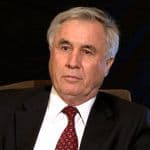
Interviews with Álvaro Varela Walker
Chile
The Catholic Church Defends Human Rights
“The Vicariate of Solidarity assumed the defense of human rights”
Transcript
In October 1973, the Catholic Church together with the rest of the churches in Chile, including the Jewish community, organized the Cooperative Committee for Peace in Chile. That was the body that worked in defense of human rights during that part of 1973 and all of 1974 and 1975.
At the end of 1975 the dictatorship arrested several committee members and asked via a letter sent by Pinochet to Cardinal Raúl Silva Henríquez, the head of the Catholic Church who created and presided over the committee, that the committee be dissolved.
[Augusto Pinochet (1915-2006) was dictator of Chile between 1973 and 1990.]
[Raúl Silva Henríquez, (1907 –1999) was a Chilean Cardinal of the Catholic Church.]
The message was clear. There were a number of prisoners in the concentration camps who were essentially hostages. This weighed heavily on Cardinal Silva Henríquez who made the decision to dissolve the Cooperative Committee for Peace.
The dictator’s excuse was that it was a Marxist group that was embedded within the Church. All that because we were defending human rights. During the time of the dictatorship anyone who defended human rights was seen as a communist, as a Marxist.
Nevertheless, Cardinal Raúl Silva Henríquez who was the head of the Chilean Catholic Church had a brilliant idea: he agreed to dissolve the Committee for Peace on December 31, 1975. He communicated this by letter to the dictator (because he had received a letter). However, he immediately established the Vicariate of Solidarity as of January 1, 1976.
[The Vicariate of Solidarity, an agency of the Chilean Catholic Church, was a human rights organization in Chile during the military regime of Augusto Pinochet.]
The Vicariate of Solidarity assumed the defense of human rights, with more force, with a more institutional character, because it was an internal department of the Catholic Church. We were within the institution of the Catholic Church.
Another stroke of genius was to install the main headquarters of the Vicariate of Solidarity, the offices, in the heart of downtown Santiago, in a building that is next to the Cathedral of Santiago in the Plaza de Armas.
[The Plaza de Armas is a historic square in central Santiago.]
That gave it a very high importance. As it was an internal matter of the church, the dictatorship could do nothing. It demonstrated the craftiness, intelligence and the capacity to act of the Catholic Church, and Cardinal Raúl Silva Henríquez in particular. The energy, the strength, the intelligence, the capacity to act of the Cardinal Raúl Silva Henríquez — I believe this was an exceptional case that few times occurs in the life of the Catholic Church or in the life of a country.
I believe it was providential that at that moment the head of the Catholic Church would have been a man like Cardinal Raúl Silva Henríquez. And from that an organization was formed that, if you review history, I believe that in the history of Chile there is no institution in the country that has received the recognition, rewards, and international awards that the Vicariate of Solidarity received. Including the United Nations Prize [in the Field of Human Rights]. It was even nominated for a Nobel Peace Prize.
That was the Vicariate of Solidarity. That was the status, the prestige it reached at the international level. That obviously affected our ability to act within the country. As the dictatorship goes on, there are changes and transformations. The Vicariate, I think, was one of the relevant instruments to force those changes and transformations.
Though the Catholic Church carried out very relevant work in defense of human rights and in denouncing human rights violations, it was very careful to not involve itself in political actions or movements.
The church’s efforts had a purpose and general objective for the country: to bring peace, to return [Chile] to a democratic path. So the Catholic Church and the Vicariate of Solidarity in particular developed a plan to that end, without becoming specifically involved in certain campaigns. But they did strongly push for an agreement in the country, a definitive end to the dictatorship, and the restoration of democracy.
Carrying out that role allowed the Church to continue to play the role of spiritual leader that it had. That is how it accomplished it. I think it was a correct decision. For example, it did not involve itself with a specific campaign. But without a doubt it gave force to and fought for the restoration of democracy.
About Álvaro Varela Walker
Álvaro Varela Walker is a Chilean attorney and human rights activist. He was born in 1951.
Varela studied law at the University of Chile. He became student body president and was active in politics. He supported Salvador Allende, a leftist who was elected president of Chile in 1970. In 1973, Allende’s government was overthrown by a military coup led by General Augusto Pinochet. As the universities in Chile came under control of Pinochet’s military regime, he was expelled.
In 1974, he began working as an attorney for the Committee for Cooperation for Peace, an ecumenical initiative of the Catholic Church to catalog and defend against human rights abuses committed by the dictatorship. In 1976, Pope Paul VI established the Vicariate of Solidarity (La Vicaría de la Solidaridad) under the leadership of the Archdiocese of Santiago, where Varela continued his human rights work. In addition to publicly denouncing the human rights abuses of the regime, the Vicariate provided legal assistance to 250,000 Chileans and became a target of the military government.
After the restoration of democracy in 1989, Varela served as a member of the Valech Commission (the National Commission on Political Imprisonment and Torture Report) chaired by Catholic Bishop Sergio Valech, which investigated the human rights record of the Pinochet regime. The Commission found that there were more than 38,000 people detained by the regime. The Valech Commission built on the work of an earlier Rettig Report, which had determined that more than 2,200 people were executed by the Pinochet regime. The Valech Commission provided an accounting of the abuses of the military regime, as well as determining reparations to its victims.