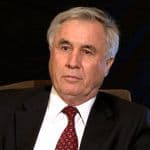
Interviews with Álvaro Varela Walker
Chile
Suffering Inspires Action
“Torture leaves an inerasable footprint”
Transcript
I joined the Cooperative Committee [for Peace] in April 1974. My first days surpassed everything the human mind could have imagined. The first thing I had to do to understand the situation was to read testimonies, the files that had already been gathered in those first few months of the dictatorship.
And what I read was absolutely inhumane. It was absolutely foreign to what is, or what should be, a civilized society or one that believes itself to be civilized.
It is unthinkable to act against members of the opposition who are detained, defenseless, blindfolded, restrained, and confined, committing the kind of torture that was used during the dictatorship.
That was my first knowledge of this. Truthfully, they were very hard days. I was barely 23 years old, and thus had little experience. Even today, forty years later, with more life experience, I think I would still be surprised in the same way I was as a 23-year old reading those testimonies.
It was unthinkable that Chilean soldiers were going to commit the torture they committed back then.
And, interestingly, this knowledge and its intensity and knowing the tremendous suffering that an important segment of the Chilean people was experiencing were a spur to become more strongly involved in the movement.
say “interestingly” because, without a doubt, the situation was high risk. I became involved along with other people. We weren’t many: [some stayed away] out of fear or for different reasons. There were very few of us who became involved in the day-to-day defense of human rights.
And we did it openly, showing our faces and using our names: visiting concentration camps, filing criminal charges before the courts using our first and last name, visiting prison rooms, police stations, etc.
But that was the strength one was given. Noting the suffering meant a strength that moved one to act. Even forgetting the personal risks that undoubtedly were real and certain.
I think torture leaves an inerasable footprint, first of all in the tortured. I do not doubt that the tortured suffers a mark that perhaps is not always visible. Torture not only has a physical effect, it also has a very relevant psychological effect.
I was a member of the Commission Against Torture, created by the government of President Ricardo Lagos. We counted at the least thirty-three thousand persons who were subjected to torture.
[Ricardo Lagos Escobar (1938 – ) is a lawyer, economist and social democrat politician, who served as president of Chile from 2000 to 2006.]
I have no doubt that there were many more but our work was restricted by time. The effect is more than individual. It affects society, confidence, and the ability to look toward the future with tranquility and without any fear.
About Álvaro Varela Walker
Álvaro Varela Walker is a Chilean attorney and human rights activist. He was born in 1951.
Varela studied law at the University of Chile. He became student body president and was active in politics. He supported Salvador Allende, a leftist who was elected president of Chile in 1970. In 1973, Allende’s government was overthrown by a military coup led by General Augusto Pinochet. As the universities in Chile came under control of Pinochet’s military regime, he was expelled.
In 1974, he began working as an attorney for the Committee for Cooperation for Peace, an ecumenical initiative of the Catholic Church to catalog and defend against human rights abuses committed by the dictatorship. In 1976, Pope Paul VI established the Vicariate of Solidarity (La Vicaría de la Solidaridad) under the leadership of the Archdiocese of Santiago, where Varela continued his human rights work. In addition to publicly denouncing the human rights abuses of the regime, the Vicariate provided legal assistance to 250,000 Chileans and became a target of the military government.
After the restoration of democracy in 1989, Varela served as a member of the Valech Commission (the National Commission on Political Imprisonment and Torture Report) chaired by Catholic Bishop Sergio Valech, which investigated the human rights record of the Pinochet regime. The Commission found that there were more than 38,000 people detained by the regime. The Valech Commission built on the work of an earlier Rettig Report, which had determined that more than 2,200 people were executed by the Pinochet regime. The Valech Commission provided an accounting of the abuses of the military regime, as well as determining reparations to its victims.