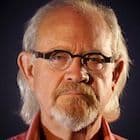
Interviews with Max du Preez
South Africa
Witnessing the Soweto Student Uprising
“What motivates a 16- or 17-year old child to knowingly give his own life for freedom?”
Transcript
[June 16], 1976. I was in Soweto as a young crime reporter with the Soweto student uprising, and safely on the side of the police, always behind the police lines. But I did see young black people, 15, 16, 17, stepping up to the front of the police line, and the police would say, “If you cross this line we’re gonna shoot you,” and then they crossed the line, and then they got shot. And you’d think—part of you thinks, “Oh, good, one fewer of these revolutionaries that want to overthrow the comfortable life that I’m living.”
[Soweto, meaning Southwest Township, was a community near Johannesburg designated for black residents. Under apartheid, townships were residential areas designated for non-white groups. Non-whites were prohibited from living in areas reserved for whites. The Soweto Uprising was a series of protests led by South African high school students on June 16, 1976. Students from various Sowetan schools began demonstrating in the streets against Afrikaans as the primary language of educational instruction.]
And the other voice says, “What motivates a 16- or 17-year old child to knowingly give his own life for freedom? What is it that I don’t know about this stuff?”
I think that’s the way change worked in my life. I couldn’t resist it. It happened to me.
About Max du Preez
Max du Preez is a South African journalist, author and documentary filmmaker. He was an anti-apartheid journalist who worked to expose government repression.
Born in 1951, Max du Preez grew up in Kroonstad, South Africa. Unlike many Afrikaners, descendants of Dutch colonial settlers who largely supported the apartheid government, his parents were open-minded toward integration of whites and non-whites.
After attending Stellenbosch University, an Afrikaner institution, du Preez began a career in journalism writing for Afrikaans and English language newspapers supportive of the apartheid government. Du Preez quickly became disenchanted by the South African media’s blatant political bias and abandoned his work in the mainstream media.
Du Preez became involved with anti-apartheid movements like the United Democratic Front. In 1988, he founded Vrye Weekblad, the first Afrikaans-language, anti-apartheid newspaper that offered alternative policy perspectives from mainstream media and was critical of the government. The government attempted to stifle the paper financially and legally by levying exorbitant registration fees and charging it with various infractions. In 1990, a member of the Civil Cooperation Bureau, a pro-apartheid group, bombed Vrye Weekblad’s headquarters. Vrye Weekblad survived, however, until 1994 when the government’s financial pressure finally forced its closure. Ironically, apartheid collapsed and South Africa transitioned to democracy later that same year.
During the transition, du Preez covered the South African Truth and Reconciliation Commission on television, publicizing the body’s efforts to ease tension and promote a unified, post-apartheid South Africa.
Today, Du Preez remains a prominent South African columnist and media personality. He has received several awards including the Nat Nakasa Award for Courageous Journalism and been named the Yale Globalist International Journalist.