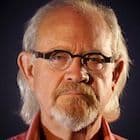
Interviews with Max du Preez
South Africa
Transition to Democracy
“Freedom and democracy have been written onto the hearts of most of South Africa’s people.”
Transcript
Well, firstly I think what I’m showing in my book was that this talk of South Africa becoming a failed state or a banana republic, it’s just pure rubbish. There’s no evidence, there’s no suggestion that this is the way we’re gonna go. And I try very hard to explain that, firstly that despite what we think and see and feel, freedom and democracy have been written onto the hearts of most of South Africa’s people. And even when they do go through a populist phase, we’ll get to the point where you take your freedom away and then they’ll say, “No.” We have now become a nation of democrats. We have a constitution that is magnificent and is rock-hard and it’s solid and it stands there. It protects all your rights. It is the most magnificent document, and it’s guarded over by a credible and functioning constitutional court.
So that kills half the fears of especially whites, but also black people. It’s like, “Oh, apartheid’s going to continue. I’m gonna be exploited again. Oh, they’re gonna take my stuff away.” No, just look at the constitution. And if you don’t believe it, just go to the constitutional court. If you feel you’re wronged—and people have done this hundreds of times in the last 20 years, and the constitutional court came and made the right judgment according to all concerned. Most of those decisions went against government. So we have that. We have a functional, functioning judiciary.
We don’t have a military breathing down the civilian government’s necks like in Zimbabwe or in Egypt. We have a very strong civil society, increasingly so—activists. When the government decided to limit press freedom civil society just mobilized and government had to back down. When government didn’t believe that we should have an ambitious HIV and AIDS policy, civil society mobilized and now we have one of the best systems in the world.
So we have a country where you can’t—government can’t get away with anything without sanction. We have regular elections. We have an independent electoral commission that has absolute credibility. We have had many elections since ’94, national elections and local elections, and never once has anyone contested the legality of the elections or contested—questioned the credibility of our electoral body, which you can’t even say of the United States.
Our newspapers, our media are freer by the day and more diverse. I think we’re probably one of the most open societies in the world—in the world. We have progressive stuff going on. So I think I would’ve loved us to do a lot better, but I think we could’ve done a lot worse.
About Max du Preez
Max du Preez is a South African journalist, author and documentary filmmaker. He was an anti-apartheid journalist who worked to expose government repression.
Born in 1951, Max du Preez grew up in Kroonstad, South Africa. Unlike many Afrikaners, descendants of Dutch colonial settlers who largely supported the apartheid government, his parents were open-minded toward integration of whites and non-whites.
After attending Stellenbosch University, an Afrikaner institution, du Preez began a career in journalism writing for Afrikaans and English language newspapers supportive of the apartheid government. Du Preez quickly became disenchanted by the South African media’s blatant political bias and abandoned his work in the mainstream media.
Du Preez became involved with anti-apartheid movements like the United Democratic Front. In 1988, he founded Vrye Weekblad, the first Afrikaans-language, anti-apartheid newspaper that offered alternative policy perspectives from mainstream media and was critical of the government. The government attempted to stifle the paper financially and legally by levying exorbitant registration fees and charging it with various infractions. In 1990, a member of the Civil Cooperation Bureau, a pro-apartheid group, bombed Vrye Weekblad’s headquarters. Vrye Weekblad survived, however, until 1994 when the government’s financial pressure finally forced its closure. Ironically, apartheid collapsed and South Africa transitioned to democracy later that same year.
During the transition, du Preez covered the South African Truth and Reconciliation Commission on television, publicizing the body’s efforts to ease tension and promote a unified, post-apartheid South Africa.
Today, Du Preez remains a prominent South African columnist and media personality. He has received several awards including the Nat Nakasa Award for Courageous Journalism and been named the Yale Globalist International Journalist.