Interviews with Max du Preez
South Africa
Religious Organizations
“Whenever they had a march or a protest or a rally, the front line were clergy, were religious people.”
Transcript
I would love to say [the churches played] a great role, but I think a rather disappointing role. The Afrikaans churches played an active role in supporting and entrenching apartheid. Over the years and when I was young it was very blatant in the sense that the Dutch Reformed Church, which was the biggest Afrikaans church that my family belonged to, said that apartheid was the will of God; it is in the Bible. And it took them well into the late ‘80s and early ‘90s to really get rid of that. So that was a very, very negative one. The Catholic Church and Anglican and Methodist to different degrees did play some role, but not very active.
Individual church leaders started playing a role. In 1983 the UDF was formed, United Democratic Front, and one reason why that was so effective was that whenever they had a march or a protest or a rally, the front line were clergy, were religious people: Desmond Tutu, Allan Boesak, Maulana Farid Esack. So you had black and white, Christians and Jews and Muslim religious leaders in front. And that was an incredibly strong message.
[The United Democratic Front was a multiracial anti-apartheid coalition. Archbishop Desmond Tutu (1931 – ) was the first black Archbishop of Capetown in the Anglican Church of Southern Africa, serving from 1986 – 1996. He is a human rights advocate and was a leading anti-apartheid activist. Tutu won the Nobel Peace Prize in 1984. Allan Boesak (1945 – ) was a religious leader and anti-apartheid activist. Maulana Farid Esack (1959 – ) is a South African Muslim scholar, writer, and political activist known for his opposition to apartheid.]
And then that kind of thing the ANC [African National Congress] completely dropped when they came back. I mean, they just dumped that whole culture that the UDF had. But that’s what made the UDF so powerful. That’s what kept us stable, because there was Desmond Tutu. He was always there with Esack and Boesak and the rabbis. So that I think was a very important role.
[The African National Congress (ANC) is a political party that served as the most prominent resistance movement against South Africa’s apartheid system, at times resorting to violence through its military wing, Umkhonto we Sizwe. It was officially banned by the South African government from 1960 to 1990. As apartheid collapsed, the ANC’s leader, Nelson Mandela, was elected President of South Africa in 1994 and established a democratic government.]
The Anglican Church started playing a very strong role through their bishops; Desmond Tutu first, and then [Njongonkulu] Ndungane, and now [Thabo] Makgoba. And I find it interesting how those three men more than any other church the leaders of another church—played such a strong role.
[Njongonkulu Ndungane (1941 – ) was the Archbishop of Capetown for the Anglican Church of Southern Africa from 1995 – 2007. He was an anti-apartheid activist and former political prisoner. Thabo Makgoba (1960 – ) is the Archbishop of Cape Town for the Anglican Church of Southern Africa.]
About Max du Preez
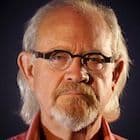
Max du Preez is a South African journalist, author and documentary filmmaker. He was an anti-apartheid journalist who worked to expose government repression.
Born in 1951, Max du Preez grew up in Kroonstad, South Africa. Unlike many Afrikaners, descendants of Dutch colonial settlers who largely supported the apartheid government, his parents were open-minded toward integration of whites and non-whites.
After attending Stellenbosch University, an Afrikaner institution, du Preez began a career in journalism writing for Afrikaans and English language newspapers supportive of the apartheid government. Du Preez quickly became disenchanted by the South African media’s blatant political bias and abandoned his work in the mainstream media.
Du Preez became involved with anti-apartheid movements like the United Democratic Front. In 1988, he founded Vrye Weekblad, the first Afrikaans-language, anti-apartheid newspaper that offered alternative policy perspectives from mainstream media and was critical of the government. The government attempted to stifle the paper financially and legally by levying exorbitant registration fees and charging it with various infractions. In 1990, a member of the Civil Cooperation Bureau, a pro-apartheid group, bombed Vrye Weekblad’s headquarters. Vrye Weekblad survived, however, until 1994 when the government’s financial pressure finally forced its closure. Ironically, apartheid collapsed and South Africa transitioned to democracy later that same year.
During the transition, du Preez covered the South African Truth and Reconciliation Commission on television, publicizing the body’s efforts to ease tension and promote a unified, post-apartheid South Africa.
Today, Du Preez remains a prominent South African columnist and media personality. He has received several awards including the Nat Nakasa Award for Courageous Journalism and been named the Yale Globalist International Journalist.