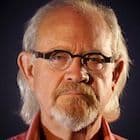
Interviews with Max du Preez
South Africa
Media Under Apartheid
“There was a separation of races in the media all along.”
Transcript
There was a separation of races in the media all along, where your first newspapers here were Afrikaner nationalist newspapers, and then sort of a few English—old English newspapers. And the English newspapers always had a small black middle class readership, although not catered for. And then you had a whole series of black newspapers started as a support for the ANC [African National Congress] or, you know, whatever.
[Afrikaners are the descendants of Dutch settlers who came to Africa’s Cape of Good Hope in 1652. During the Anglo-Boer Wars that spanned the 19th and 20th centuries, the Afrikaners were overtaken by the British Empire and agreed to live under British rule. The African National Congress (ANC) is a political party that served as the most prominent resistance movement against South Africa’s apartheid system, at times resorting to violence through its military wing, Umkhonto we Sizwe. It was officially banned by the South African government from 1960 to 1990. As apartheid collapsed, the ANC’s leader, Nelson Mandela, was elected President of South Africa in 1994 and established a democratic government.]
So by the time I got into journalism, you had a left-of-center newspaper in Johannesburg called the Rand Daily Mail, which had some black readership—the black middle class, black intelligentsia. It also had separate editions. We had the situation in South Africa then that the Sunday Times, which was the biggest newspaper, would have the Sunday Times, and then it would have the Sunday Times Extra, which was aimed at a black market, which you’d get a slightly different cover and then slightly different inside.
So yes, there was a big segregation. Afrikaans newspapers were mostly—were only aimed at white Afrikaans speakers, whereas most people who speak Afrikaans in this country are not white. The white speakers are in the minority. And that picture has now changed, that most Afrikaans newspapers are read mostly—well, more than half of it is read by so-called Coloured people, Coloured Afrikaans-speaking people.
[Coloured is the commonly used term to denote mixed-race people in South Africa.]
But we still have now—we have newspapers aimed specifically at the black market. We have the Sowetan, for instance. We have some newspapers in Zulu, in KwaZulu-Natal in the Zulu language. But there’s—your big, national newspapers are being read by everybody in the middle class.
[KwaZulu-Natal is a South African province where Zulu is the predominant language.]
About Max du Preez
Max du Preez is a South African journalist, author and documentary filmmaker. He was an anti-apartheid journalist who worked to expose government repression.
Born in 1951, Max du Preez grew up in Kroonstad, South Africa. Unlike many Afrikaners, descendants of Dutch colonial settlers who largely supported the apartheid government, his parents were open-minded toward integration of whites and non-whites.
After attending Stellenbosch University, an Afrikaner institution, du Preez began a career in journalism writing for Afrikaans and English language newspapers supportive of the apartheid government. Du Preez quickly became disenchanted by the South African media’s blatant political bias and abandoned his work in the mainstream media.
Du Preez became involved with anti-apartheid movements like the United Democratic Front. In 1988, he founded Vrye Weekblad, the first Afrikaans-language, anti-apartheid newspaper that offered alternative policy perspectives from mainstream media and was critical of the government. The government attempted to stifle the paper financially and legally by levying exorbitant registration fees and charging it with various infractions. In 1990, a member of the Civil Cooperation Bureau, a pro-apartheid group, bombed Vrye Weekblad’s headquarters. Vrye Weekblad survived, however, until 1994 when the government’s financial pressure finally forced its closure. Ironically, apartheid collapsed and South Africa transitioned to democracy later that same year.
During the transition, du Preez covered the South African Truth and Reconciliation Commission on television, publicizing the body’s efforts to ease tension and promote a unified, post-apartheid South Africa.
Today, Du Preez remains a prominent South African columnist and media personality. He has received several awards including the Nat Nakasa Award for Courageous Journalism and been named the Yale Globalist International Journalist.