Interviews with Max du Preez
South Africa
Censorship under Apartheid
“Our newspaper was closed down in February 1994, because we ran exposés of death squads.”
Transcript
In the ‘60s and ‘70s and ‘80s there were formal pieces of legislation limiting what you’re allowed to write or say in public. There was—for instance, you were not allowed to quote anybody who was banned, and the entire ANC and a lot of the UDF and the Communist Party and the trade unions were banned. They were banned people. You couldn’t say anything that could be construed as furthering the aims of the enemies of the state, in other words the ANC [African National Congress]. You couldn’t report on police—on certain police conduct. You were not allowed to report on what happened in a township which was declared a state of emergency. There were Official Secrets Acts. Yeah, there was quite a lot of that, quite severe.
[Banning was a legal process during apartheid enabled primarily by the Suppression of Communism Act, where individuals were prohibited from communicating with more than one person at a time and from traveling domestically or internationally without permission. Organizations were also banned by the government. The media was restricted in covering banned individuals. The African National Congress (ANC) is a political party that served as the most prominent resistance movement against South Africa’s apartheid system, at times resorting to violence through its military wing, Umkhonto we Sizwe. It was officially banned by the South African government from 1960 to 1990. As apartheid collapsed, the ANC’s leader, Nelson Mandela, was elected President of South Africa in 1994 and established a democratic government. The United Democratic Front was a multiracial anti-apartheid coalition. Under apartheid, townships were residential areas designated for non-white groups. Non-whites were prohibited from living in areas reserved for whites.]
But there was also a lot of self-censorship by all, by Afrikaans and English newspapers trying to sort of pacify the government, and at the same time to pacify the advertisers. Advertisers in newspapers were mostly big business. They didn’t want to annoy the apartheid government because they were making good money under apartheid.
So if you get a little bit radical, then they say, “Well, I don’t feel comfortable advertising in your newspaper.”
The newspaper that I ran, for instance, Vrye Weekblad, never got advertising. There was one brave guy who ran a mining company who completely agreed with what we were doing, and he promised me a series of full-page ads over a few months that would have paid for an awful lot. And the very next day because, you know, they listened to my phone and stuff—the very next day he was called in and warned that he would be fired if he spent a penny on me. That came from the government and then via his bosses.
But in the end our newspaper was closed down in February 1994 ironically, because we ran exposés of death squads, police death squads. We broke the story for the first time, that the South African police actually had a unit at a farm outside of Pretoria called Vlakplaas where they trained people to harass the ANC, kidnap them, torture them, assassinate them. And they used an awful lot of ANC guerillas who were forced to switch sides, either through torture or bribery or being compromised. And we exposed that story for the first time. Also the military had a similar—had two similar outfits. And we spent an awful lot over three or four years just running week after week confessions by more policemen about how they tortured and killed and stuff. [Vlakplaas was a farm near the city of Pretoria that was a training facility for counterinsurgency forces of the South African police under apartheid.]
But one of the stories that we ran was the head of the forensics laboratory in South Africa, a man called General Lothar Neethling, a brilliant chemist by training, he spent his time preparing toxins and all kinds of potions to put into people’s drink to kill them, to give them heart attacks that couldn’t be detected, or to just incapacitate them so they could be abducted, kidnapped and stuff. [General Lothar Paul Neethling (1935 – 2005) was deputy chief commissioner of the South African Police during apartheid. He was a scientist who was alleged to have used police forensic laboratories to produce chemical and biological weapons for use against anti-apartheid activists and South Africa’s black population.]
And we ran this exposé with his name, because we had to run his name; otherwise it’s just another allegation. And he ran a five-year court case against me, which we won in the Supreme Court, because everything we said was true. But in the appellate division the judges said they couldn’t—they didn’t know who to believe. And his legal costs were paid by the state, but we were then forced to pay our own—our own and his legal costs, which was more than we had spent in two years on the newspaper. So that’s why we had to close down, which I think was the original idea: close us down because we’d go bankrupt. So we closed down two months before South Africa became a democracy.
About Max du Preez
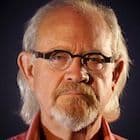
Max du Preez is a South African journalist, author and documentary filmmaker. He was an anti-apartheid journalist who worked to expose government repression.
Born in 1951, Max du Preez grew up in Kroonstad, South Africa. Unlike many Afrikaners, descendants of Dutch colonial settlers who largely supported the apartheid government, his parents were open-minded toward integration of whites and non-whites.
After attending Stellenbosch University, an Afrikaner institution, du Preez began a career in journalism writing for Afrikaans and English language newspapers supportive of the apartheid government. Du Preez quickly became disenchanted by the South African media’s blatant political bias and abandoned his work in the mainstream media.
Du Preez became involved with anti-apartheid movements like the United Democratic Front. In 1988, he founded Vrye Weekblad, the first Afrikaans-language, anti-apartheid newspaper that offered alternative policy perspectives from mainstream media and was critical of the government. The government attempted to stifle the paper financially and legally by levying exorbitant registration fees and charging it with various infractions. In 1990, a member of the Civil Cooperation Bureau, a pro-apartheid group, bombed Vrye Weekblad’s headquarters. Vrye Weekblad survived, however, until 1994 when the government’s financial pressure finally forced its closure. Ironically, apartheid collapsed and South Africa transitioned to democracy later that same year.
During the transition, du Preez covered the South African Truth and Reconciliation Commission on television, publicizing the body’s efforts to ease tension and promote a unified, post-apartheid South Africa.
Today, Du Preez remains a prominent South African columnist and media personality. He has received several awards including the Nat Nakasa Award for Courageous Journalism and been named the Yale Globalist International Journalist.