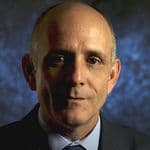
Interviews with Jose Luis Garcia Paneque
Cuba
The Black Spring
“I was sentenced to 24 years in prison.”
Transcript
It all really started on March 18, 2003. On that day, my life started and totally changed, radically. That day at around 5 PM some state officers knocked on my door and they were coming to search my house because there was a report saying that subversive activities took place in my home. They came in. They did not present any document. They came into my house. They made me sit and my four children were there and they conducted a thorough search that lasted six hours.
They took everything that they saw like books, cameras, a small tape recorder, a fax machine, a typewriter, personal medical equipment, a sphygmomanometer, a stethoscope. The funniest thing is that they took every single book, all the literature that was in my house. My children’s medications were taken as well since they were supposedly medications coming from the enemy and therefore they were illegal in my household. They came from packages that the Cuban regime manufactured. They were normally sent to Cuba and they were wrapped in different packaging. There was nothing illegal in my house.
All the rest was something a person could have at home such as medical literature, books, books from Cuban authors in exile, literature about human rights, they even took things as absurd as the Universal Declaration of Human Rights. And among those books, there was also a geography book that belonged to my eldest daughter. And I said to them, “You are going to take the geography book of my eldest daughter?” That was subversive literature according to them.
Around 11 PM they said they will put everything they have seized in boxes and that I am under arrest because I have committed crimes against the Cuban state, and that I was subversive against the Republic of Cuban. I was taken into a dungeon. They held me there for a few days. The judge requested twenty years and I was condemned to twenty-four years. Because something really funny happened. On the day I was to be taken to court, oddly enough my trial was to take place in the theatre at the Faculty of Medicine where I worked as a teacher and as a doctor.
Some students were allowed to come in so that they could see how a doctor, a surgeon, was punished for opposing the system. In that trial which lasted all day, all accusations were based on information that said that I sent information outside of the country. It was based on the fact that I had meeting that were according to them, against the regime and that I mingled with foreign people, including ambassadors. Something odd happens in Cuba.
Ambassadors, especially those from the Western hemisphere, need to inform where they are going to be able to go outside of the Cuban capital, to which house they are going, or to which specific place they are going to go. So if an ambassador informed that he was going to my house, the Cuban government knew about it. But, I do not think it is illegal to receive guests in my home. If people coming to my home need authorization from others, I have not told them not to come since it may affect them negatively. But I do not think that this has anything to do with me because I do not hold the same ideas as the people who came to visit me. And this trial concludes in the afternoon and the following night I was sentenced to 24 years in prison.
About Jose Luis Garcia Paneque
José Luis García Paneque was born in 1965 in Cuba. He studied medicine at the Institute of Medical Sciences of Camaguey. As a doctor, he specialized in plastic surgery.
In 1998, he became active as a dissident, joining the Freedom Press Agency, an alternative journalism project. In 2000, he became the initiative’s director. For his activism, he was removed from his position at the hospital where he worked.
In March 2003, Dr. García was among the 75 dissidents who were arrested in the crackdown known as the Black Spring. He was summarily sentenced to 24 years in prison. He was imprisoned for seven years and four months, two years of which were in solitary confinement. The harsh conditions in prison caused him to lose half of his body weight, posing life-threatening consequences to his health. In 2010, he was released in negotiations brokered by the Roman Catholic Church. As a condition of his release, Dr. García was required to leave Cuba.
Since leaving his homeland, Dr. García has overseen the Freedom Observatory project, which is associated with the Institute of Strategic and International Studies at the Catholic University of Valencia in Spain. He currently lives in Florida.
Follow Dr. García’s blog at http://vocesdeldestierro.wordpress.com/.