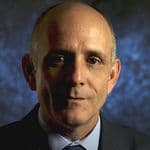
Interviews with Jose Luis Garcia Paneque
Cuba
Background
“I realized that the system under which I lived was a lie.”
Transcript
The process to become a human rights activist began many years before becoming a public activist. And really, I think this started in my childhood, as a product of a Cuban traditional family, working in a sugar plant in Cuba’s southwestern area. My family had values and principles which were taught to me and my siblings, and what I received from my family was an education based on respect, love for freedom, love for the family, in the belief that one had rights for one’s self, basically over what one said or expressed.
Many years passed. I was one of many born during the process known as the Cuban revolution. So I had to go to school where ideas were completely different to what I learned at home. At school they only wanted me to understand, learn and assimilate the principles and doctrine of the revolution. This revolution, which started in 1959 with Fidel Castro entering Havana and taking power. I studied medicine, and I started to interact with people from other countries who were studying in Cuba at that moment. I started gaining access to literature and I realized that the world is a bit bigger than what the regime wanted to show me. Bigger than what they only wanted me to learn.
It is really here where my life was defined. Then, a series of events took place in 1983, during the Grenada invasion and all the mass demonstrations of populism, it was then I began to think that it was all a lie. I realized that the system under which I lived was a lie. It was all false. From that moment on my life started being totally different. It came to a point where I jeopardized my graduation as a physician. By the end of my studies I encountered many problems to graduate as a physician; not academic problems, as academically I was performing well. I had concluded studying what I loved and then I was fully trained to work as a physician. But under the Cuban political view, according to the government guidelines, I was taking the enemy side. Because in Cuba you could not be in disagreement; you were either with them or you were their enemy.
That is when my life as a dissident started. I did not participate in the political process they tried to impose on me.
About Jose Luis Garcia Paneque
José Luis García Paneque was born in 1965 in Cuba. He studied medicine at the Institute of Medical Sciences of Camaguey. As a doctor, he specialized in plastic surgery.
In 1998, he became active as a dissident, joining the Freedom Press Agency, an alternative journalism project. In 2000, he became the initiative’s director. For his activism, he was removed from his position at the hospital where he worked.
In March 2003, Dr. García was among the 75 dissidents who were arrested in the crackdown known as the Black Spring. He was summarily sentenced to 24 years in prison. He was imprisoned for seven years and four months, two years of which were in solitary confinement. The harsh conditions in prison caused him to lose half of his body weight, posing life-threatening consequences to his health. In 2010, he was released in negotiations brokered by the Roman Catholic Church. As a condition of his release, Dr. García was required to leave Cuba.
Since leaving his homeland, Dr. García has overseen the Freedom Observatory project, which is associated with the Institute of Strategic and International Studies at the Catholic University of Valencia in Spain. He currently lives in Florida.
Follow Dr. García’s blog at http://vocesdeldestierro.wordpress.com/.