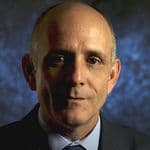
Interviews with Jose Luis Garcia Paneque
Cuba
Cuba's Role in Grenada
How Cuba’s role in Grenada influenced Dr. Garcia’s path
Transcript
At that moment the Soviet Union was in its expansion efforts and Cuba as its satellite was supporting them, right? They were infiltrating Nicaragua. They were also intervening in Grenada. That was what they told the people. An image of a responsible state was projected, a state that helps everybody and which was providing them with doctors and teachers, building an airport for them. This is, the all-good Cuba, the Cuba that provided for everybody.
But apparently the regime did not hide anything, and had no interests in giving support to others. What was really happening was that another dictatorship was in the middle of this process. There was an internal conflict in the country, with 500 Cubans on the tiny island. And those people had weapons. Cuba was in that moment for the first time, confronting the American people with a Cuban professional army. And it was making the people believe that those people were heroes defending their country, the country of Maurice Bishop.
It was an effervescent process and then it was announced to the Cuban people that about seven people hung on to the flag sacrificing themselves for the country. When people listened, they listened to Fidel Castro who was exciting the masses. We saw the reactions of people in the streets and that something big was going on. And people really believed that those people were attacked. But days went by and all that was a huge lie. Nothing like the picture painted had really happened. When the report was given, we realized that it was a lie. Nobody sacrificed to build an airport. We were told that some people had died due to Cuba’s irresponsibility.
Everything crumbled down and I was one of those really impressed and I realized to what extent it was a regime based on lies. I realized that it was all a lie. Those people weren’t there to be teachers, nor to be doctors, nor to build an airport. Those people were really occupying that country. There were weapons in that country. That is, it was all a lie. And up to that moment the idea of international proletarians and the idea of international solidarity was the main thing in Cuba. That was the key point in my definition. As a university student at that moment, this really influenced me. It made me define my position. From there I had a clear idea with respect to what the rest of my life was going to be.
About Jose Luis Garcia Paneque
José Luis García Paneque was born in 1965 in Cuba. He studied medicine at the Institute of Medical Sciences of Camaguey. As a doctor, he specialized in plastic surgery.
In 1998, he became active as a dissident, joining the Freedom Press Agency, an alternative journalism project. In 2000, he became the initiative’s director. For his activism, he was removed from his position at the hospital where he worked.
In March 2003, Dr. García was among the 75 dissidents who were arrested in the crackdown known as the Black Spring. He was summarily sentenced to 24 years in prison. He was imprisoned for seven years and four months, two years of which were in solitary confinement. The harsh conditions in prison caused him to lose half of his body weight, posing life-threatening consequences to his health. In 2010, he was released in negotiations brokered by the Roman Catholic Church. As a condition of his release, Dr. García was required to leave Cuba.
Since leaving his homeland, Dr. García has overseen the Freedom Observatory project, which is associated with the Institute of Strategic and International Studies at the Catholic University of Valencia in Spain. He currently lives in Florida.
Follow Dr. García’s blog at http://vocesdeldestierro.wordpress.com/.