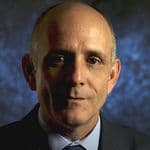
Interviews with Jose Luis Garcia Paneque
Cuba
Becoming an Activist
“So I made up my mind and one day I decided to participate”
Transcript
Now, a human rights movement was barely there in the Cuba during the 80’s and 90’s. They were very small isolated groups mainly in the country’s capital. I lived in the province. But times started changing. The Berlin Wall came down. The regime fell into a crisis. Opposing groups started appearing within the island. People began to have other ideas and other interests. People really saw the need to start a radical transformation in the regime, which was already depleted, and it started with the disintegration and crumbling of the Berlin wall. And it is really here that my activism began.
So I made up my mind, and one day I decided to participate in these groups. It started as I just told you and now I write about it. I started writing and initially it was a difficult process to even carry a press release, a notebook, a pencil, or even write a note. This was reviewed by various people, transmitted over the phone to Florida and the radio stations located in Florida and sent back to Cuba. As you know the regime interferes with and obstructs this information. So we were denouncing what took place within the island, but the Cuban population was not aware of it. This process improved though and we went from passing informative reports to research journalism. We started investigating within the population, what is that was taking place in society, what was going on inside the Cuban population.
Those who joined us started projects like the Varela Project. [Named for a Cuban religious leader, the Varela Project was a civil society initiative in Cuba, centered on a petition drive advocating democratic reforms.] There were groups trying to foster groups like “Todos Unidos” (All United), the “Asamblea para la Democratización de Cuba” (Assembly for Cuba’s democratization). This started materializing and making us more visible within the Cuban population. We were better prepared, we could gather in small groups. And it was in these moments when we started being repressed. The only alternative the regime had was to repress us. When you take on this responsibility, you decide to go beyond your fears and you start to say what you think, to think with your own mind. One knows that a risk is being taken, a pretty big risk. It was a big risk but it had to be done. And I was really convinced that once I assumed this responsibility, my family was also in danger. I was aware of that. I was aware of the means to protect them as a father who was trying to protect his family. It was a natural reaction. The problems go beyond your family and your professional life. I started to have problems at work in the hospital.
In 2001, I was expelled from the burns unit where I worked, and where I had always worked. I was expelled basically due to my political views. I did not make a medical mistake.
From there, my life became more active. My home became a meeting point for many speakers, many groups came from centers who could take information and transmit it nationally. People started visiting my house, including ambassadors or people coming from other countries. This kept going on up to 2003. In 2003 we were not invisible anymore because we were in the streets. We were part of the streets. We were part of the people. The people were coming to us. And international public opinion favored us. And the regime realized what measures should be taken right then and there. That is, they were also in danger, so they were out to punish us. We were a dissident group in Cuba.
About Jose Luis Garcia Paneque
José Luis García Paneque was born in 1965 in Cuba. He studied medicine at the Institute of Medical Sciences of Camaguey. As a doctor, he specialized in plastic surgery.
In 1998, he became active as a dissident, joining the Freedom Press Agency, an alternative journalism project. In 2000, he became the initiative’s director. For his activism, he was removed from his position at the hospital where he worked.
In March 2003, Dr. García was among the 75 dissidents who were arrested in the crackdown known as the Black Spring. He was summarily sentenced to 24 years in prison. He was imprisoned for seven years and four months, two years of which were in solitary confinement. The harsh conditions in prison caused him to lose half of his body weight, posing life-threatening consequences to his health. In 2010, he was released in negotiations brokered by the Roman Catholic Church. As a condition of his release, Dr. García was required to leave Cuba.
Since leaving his homeland, Dr. García has overseen the Freedom Observatory project, which is associated with the Institute of Strategic and International Studies at the Catholic University of Valencia in Spain. He currently lives in Florida.
Follow Dr. García’s blog at http://vocesdeldestierro.wordpress.com/.