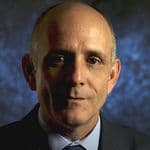
Interviews with Jose Luis Garcia Paneque
Cuba
How the Regime Maintains Control
“The government instills fear in the people.”
Transcript
The key in the opposition within Cuba is to try and win that sector which starts to be unhappy and those who are capable of overcoming their fears. You would say “fear?” “What do you mean by fear?” Yes. Through these 52 years, one of the government tactics is to instill fear in the people about what takes place outside of Cuba. This is the following image: Cuba is not well, Cuba has problems, but the exterior is worse than Cuba and if you do not have us you will then have that awful world within Cuba. The Americans, who will take your homes away, will attack you. Those living in the south of Florida will take over what you have today.
Therefore, we are the solution. So this creates a state of fear, but the population who has kept in touch with its family in the exterior, has been in touch with the real world. This way, as seen in the last years, and due to the deterioration of the Cuban economy, people have realized that the Cuban regime does not have the solution; that the Cuban regime does not represent them.
Within the island, the government has total impunity. I repeat, total impunity.
About Jose Luis Garcia Paneque
José Luis García Paneque was born in 1965 in Cuba. He studied medicine at the Institute of Medical Sciences of Camaguey. As a doctor, he specialized in plastic surgery.
In 1998, he became active as a dissident, joining the Freedom Press Agency, an alternative journalism project. In 2000, he became the initiative’s director. For his activism, he was removed from his position at the hospital where he worked.
In March 2003, Dr. García was among the 75 dissidents who were arrested in the crackdown known as the Black Spring. He was summarily sentenced to 24 years in prison. He was imprisoned for seven years and four months, two years of which were in solitary confinement. The harsh conditions in prison caused him to lose half of his body weight, posing life-threatening consequences to his health. In 2010, he was released in negotiations brokered by the Roman Catholic Church. As a condition of his release, Dr. García was required to leave Cuba.
Since leaving his homeland, Dr. García has overseen the Freedom Observatory project, which is associated with the Institute of Strategic and International Studies at the Catholic University of Valencia in Spain. He currently lives in Florida.
Follow Dr. García’s blog at http://vocesdeldestierro.wordpress.com/.